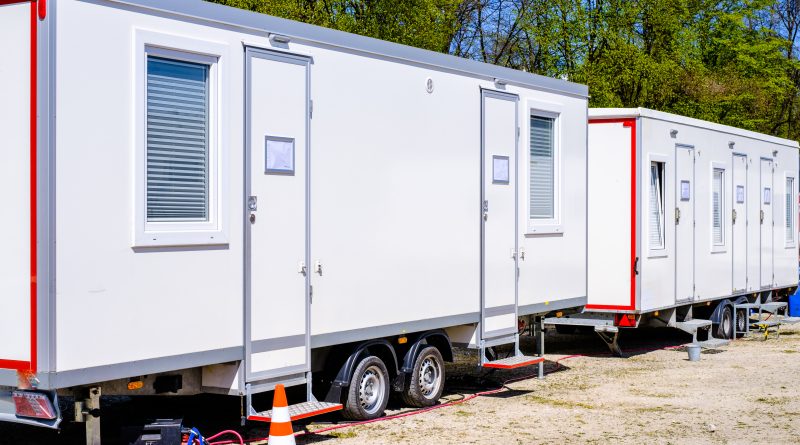
5 Benefits of Mobile Office Trailers You Haven’t Considered
Running a coordination call from your truck cab works for a day or two. After that, the missing site office starts costing you time, paperwork and patience.
Most crews treat a mobile office trailer as a short-term line item, but the benefits run deeper. The right unit can protect capital, secure plans and serve the job long after mobilization.
1. How Quickly Can a Mobile Office Trailer Get Your Site up and Running?
Construction managers spend most of their time in an on-site field office, so the job can’t fully get moving without one. A leased trailer can arrive ready to work, while a built office may take weeks. Until then, submittals and inspection records tend to be kept in truck cabs.
The paperwork alone makes speed worth it. According to Eagle Leasing, which has offered on-site storage and office space since 1967, “Permits, plans, safety records and inspection documents need a dry, secure home on the site itself.”
A mobile office trailer that arrives furnished and climate-controlled gives those records a home before the first pour. That quick start also lays the groundwork for using the trailer as a long-term office solution.
2. How Does Leasing an Office Trailer Protect Your Capital?
A lease turns your site office into a predictable monthly expense. Leasing generally needs less cash or credit up front than buying, so money stays available for labor, materials and contingencies. Some leases even include maintenance at no extra cost, which keeps routine upkeep out of the project budget and off your crew’s task list.
Buying or building an office ties that capital up, and any repair mid-project hits both your budget and your schedule. The trade-off is that leasing usually costs more than buying over an asset’s full life. For a job with a defined end date, that predictability is often worth it.
3. How Secure Is a Mobile Office Trailer for Plans and Equipment?
A trailer gives your site a lockable home for plans, records and small equipment. On an open site, the risks are familiar — stolen laptops and tools, loose drawings and after-hours break-ins. Padlocks are a common weak point. “Standard padlocks are easy targets for bolt cutters,” Eagle Leasing cautions.
Providers typically offer upgrades you can match to the site’s risk level. Common add-ons include:
- Heavy-duty door locks.
- Motion-sensor lighting paired with an alarm.
- Security screens or bars over the windows.
- Skirting that closes off the space beneath the trailer.
Choosing only the upgrades the site calls for means you pay for the protection you actually use.
4. Can a Mobile Office Trailer Grow With Your Project?
Yes, and you’ll usually see the moment coming. A new phase kicks off, more subcontractors show up and a single-office unit stops fitting the team. Because phased work brings trades on at different times, the office you need in month two may look nothing like the one you need in month eight.
Office trailers come in a range of lengths and layouts, so crews can start compact, add units as the project expands and release them as demand drops. Planning keeps that growth smooth. “Lining up your units now means they land the moment the schedule calls for them,” Eagle Leasing advises. Office space then tracks the schedule, and you pay for the area the crew is using.
5. Can a Mobile Office Trailer Work as a Long-Term Office Solution?
Yes, as long as the setup is right. The real question is whether the trailer still works well a year into the job, and that comes down to a few early decisions. Plan for:
- Permits and zoning approval secured before placement.
- Firm, level ground and proper anchoring.
- Climate control, plus skirting for insulation and weather protection.
- Dependable power and any utility hookups the team needs.
Ground conditions deserve extra attention. “If your site is questionable, make sure you talk to us before delivery. It also never hurts to have a back-up spot in mind where there won’t be any issues,” Eagle Leasing recommends.
Anchoring helps secure a mobile office trailer as a long-term office solution. Ask your local building department how many tie-downs your jurisdiction requires for an office trailer that will sit through several seasons. Settle the setup early, and the trailer can stay dependable from mobilization to closeout.
What Else Should You Know About Mobile Office Trailers?
Site managers run into the same practical questions on nearly every project. Rental terms, permits and weather top the list.
Q: Should You Rent, Lease or Buy a Mobile Office Trailer?
A: It depends on how long the job will run and how much cash you want tied up. Monthly rental fits short or uncertain jobs. A long-term lease usually brings a better rate for multiyear work. Buying makes the most sense when you’re confident you’ll use the unit across several projects.
Q: Do You Need a Permit for a Mobile Office Trailer?
A: Often, yes, though the rules depend on where the site is located. Requirements for zoning, anchoring, occupancy classification and utility connections can all differ between jurisdictions. Chicago, for example, ties each construction trailer permit to active work on the site and requires removal within three months after that work ends. Call your local building department early, since approval timelines can push back your mobilization date.
Q: Can Mobile Office Trailers Handle Harsh Weather?
A: A multiseason job puts a trailer through storms, summer heat and winter cold. Heating keeps the space usable in winter, and OSHA lists air conditioning among the engineering controls that make hot workplaces safer. Skirting adds insulation, and anchoring rated for local wind loads helps the unit ride out storms.
Keeping documents inside matters just as much. “Summer storms roll in fast, and a soggy set of stamped drawings has ruined more than one inspection day,” Eagle Leasing warns.
Which Mobile Office Trailer Benefit Will Matter Most on Your Next Site?
A mobile office trailer does more than save time and money. It can protect capital, keep plans and equipment secure, scale with the project and hold up as a long-term office. Before your next mobilization, think through how long the job will run, what needs protecting and how the team might grow. Then choose the setup that fits.
*Please note that this list includes sponsored content. Some of the companies, products, or services featured have entered into commercial agreements for placement. Sponsored placements do not necessarily reflect an endorsement and should be considered alongside other options in the marketplace.