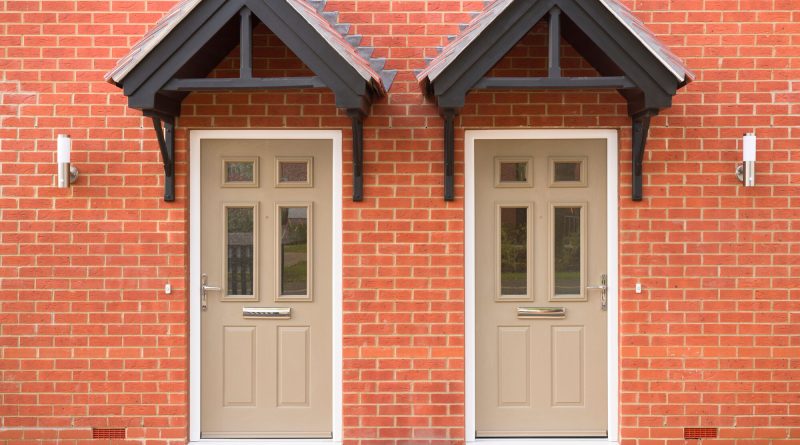
£9.58bn funding to support 73,600 new affordable homes in England
Subscribe to our free newsletter today to keep up to date with the latest construction and civil engineering news.
Almost £10bn has been allocated to support more than 73,000 social and affordable homes across England, giving contractors and suppliers a clearer view of housing demand over the next decade.
The government has allocated £9.58bn to 33 strategic partners outside London, including housing associations and other providers. The funding is expected to support 73,600 homes, with nearly two-thirds intended for social rent.
It is the first major allocation from the £39bn Social and Affordable Homes Programme, which is intended to deliver 300,000 homes over 10 years. At least 60% of homes delivered through the programme are expected to be for social rent.
For the construction sector, the next question is how quickly that funding can be converted into viable projects.
Councils, housing associations and their construction partners will need enough staff, skills and supply-chain capacity to move schemes through planning, procurement and construction.
A decade of funding could give construction firms greater certainty
Housing programmes have often operated through shorter funding cycles. A 10-year programme gives companies more visibility when deciding whether to recruit workers, invest in equipment or increase production.
The first allocation also spreads demand across several large regional markets.
Greater Manchester is set to receive more than £529m to support around 4000 social and affordable homes. West Yorkshire has been allocated £441m, while £445m is going to the North East and £409m to the West Midlands. Liverpool City Region and South Yorkshire are also receiving funding.
London is being funded separately, with at least £6bn initially available for housing providers in the capital.
This regional spread matters for companies working across residential construction. A steady programme of publicly funded development could give main contractors, specialist subcontractors and building product manufacturers more confidence about future orders.
It could also shape decisions that take years to produce a return. Construction businesses need greater certainty before recruiting apprentices, expanding manufacturing capacity or increasing their regional presence.
However, a funding allocation does not guarantee a construction contract.
Projects still need suitable sites, planning approval, procurement and skilled workers. Housing providers also need development teams that can move schemes from funding approval to completed homes.
The pace of construction will therefore depend on how quickly the programme produces a reliable flow of projects.
Existing delivery figures show how far output must rise
The latest affordable housing figures show the scale of the task.
England delivered 64,762 affordable homes in 2024/25, the highest total since 2014/15. Of these, 12,198 were for social rent, the highest number since 2013/14.
Figures from earlier in the construction process are weaker. There were 45,418 affordable housing starts during the year. Although that was 3% higher than the previous year, it was the second-lowest level recorded on a comparable basis since 2016/17.
The new programme will need to lift that rate if ministers are to increase social housing supply by the amount proposed.
Demand already far exceeds annual delivery.
Around 1.34 million households were on local authority housing waiting lists at the end of March 2025. At the end of March 2026, 135,580 households were living in temporary accommodation in England.
Those households included 177,530 children, up 5.2% from a year earlier.
The gap between housing need and annual construction puts pressure on the government and housing providers to increase delivery. Gross completion figures also tell only part of the story because existing social homes can leave the sector through sales and demolitions.
New construction must therefore replace lost stock as well as increase the overall number of homes available for social rent.
For contractors, that points to a long period of potential demand. For government and housing providers, it raises a separate question about whether the market has enough capacity to deliver at the required rate.
Skills and development capacity could limit delivery
The government has acknowledged that some councils need more in-house expertise before they can substantially increase housebuilding.
A further £46m has been committed over three years to the Capacity to Build programme. The funding is intended to help councils improve their workforce, recruit specialist staff and prepare bids under the Social and Affordable Homes Programme.
Support can include feasibility work, site investigations, technical due diligence and development planning.
Skills shortages also extend beyond councils.
The government is funding a construction skills package intended to train up to 60,000 additional skilled workers. Government figures published earlier this year showed more than 35,000 vacancies in construction, with more than half linked to a lack of required skills.
Housing also competes for labour with infrastructure, energy and other major construction programmes.
The £39bn housing programme could therefore affect a broad range of construction businesses. Suppliers may need to plan production around higher public-sector residential demand, while contractors will have to decide where to commit limited labour and management resources.
The 10-year funding period should make some of those investment decisions easier. It cannot remove every constraint on delivery.
The main measure of progress will be how quickly funded homes move into procurement, start on site and reach completion. If that rate rises, the programme could provide a substantial source of construction work for much of the next decade.
If skills shortages, planning delays and limited development capacity continue to restrict output, the gap between housing investment and completed homes will remain.
Source