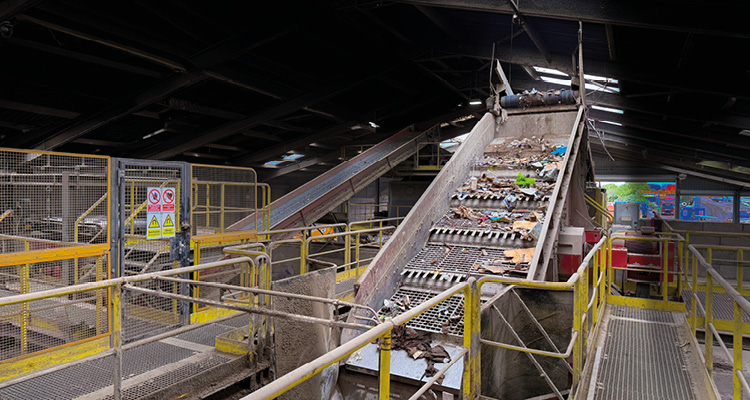
Allstone is consistently proving that waste management services are a force for good
Family-owned since 1983, Allstone is renowned for supplying high-quality aggregates, skips and waste management services in an efficient and sustainable manner. The company has been on an impressive growth journey since its last feature in Construction & Civil Engineering magazine a year ago. Rowan Elliott, Managing Director, provides an overview of the current state of the business.
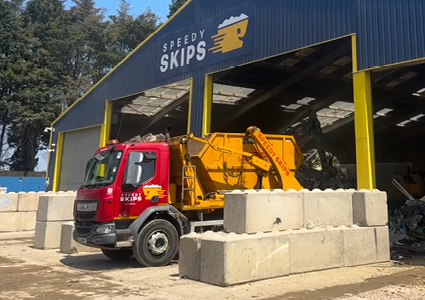
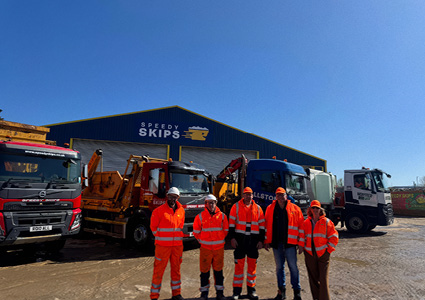
“The past twelve months have been an exciting and positive time for the business. In addition to our waste recycling, aggregates and concrete business, we now have our own permitted restoration scheme as part of our quarry operation. We have grown revenues by around 30 per cent over the past three years and made some acquisitions along the way, bringing our turnover to over £22 million. Local to Gloucester, we employ over 100 people across five centres of operation, including a waste recycling and recycled aggregates facility in the centre of Gloucester, two sites from recently acquired concrete businesses, and a quarry and inert restoration facility a few miles away.”
Rather than being an afterthought, sustainability is central to how Allstone operates. The company is leveraging its waste recycling business to promote a sustainable economy while reducing the carbon impact of its waste streams, both for itself and for its customers. Offsetting the amount of waste that would typically go to landfill is a key strategy for the business, which James Bibby, Head of Operations and Supply, discusses in greater detail. “At our core, we are a waste and recycling business reducing environmental impact wherever we can. Over the last year and a half, we discovered that our biggest opportunity was driving up our recycling rates and looking closely at our waste streams, including how we handle other people’s waste and how to direct it to the least environmentally harmful outlets.
“We’ve worked hard to measure and benchmark that data, which has allowed us to report back to our customers in a meaningful way. A couple of our customers are particularly keen on this, and we now provide them with bespoke reports detailing exactly what they are bringing in and where it goes. We have also focussed on improving transparency with our supply chain, especially around the end of life of all materials, with the aim of driving our CO2 impact, and therefore our customers’ CO2 impact, down as far as possible. Being in the waste industry, I think it surprises people outside the sector to learn how big the environmental impact is of landfilling waste, and how much we can recycle,” he elaborates.
Indeed, the impact of landfilling waste is considerable. An average skip sent to landfill generates around 1.25 tonnes of CO2. By maintaining an average recycling rate of approximately 70 per cent, and achieving 100 per cent on some skips, Allstone has reduced the CO2 impact of an average skip to around 0.4 tonnes, roughly a third of the landfill equivalent. For customers in waste-heavy industries like construction, where the environmental impact has traditionally been significant, that difference adds up considerably.
“We process over 50,000 tonnes of material through our waste transfer facility each year, ranging from private individuals to established and larger local and national businesses. Whether it’s metals, wood, cardboard or uPVC, our aim is to maximise recycling rates across all the material received at our site. This is material that can easily go straight to landfill; but we’re helping to prevent this happen and as a result, reducing total environmental impact. What surprises me, is how little we are taught about the waste cycle. People often assume that a skip is simply a container that gets emptied into a hole in the ground, but this isn’t the case and there’s a lot of hard work and science behind our recycling activities,” Rowan adds.
With zero landfill as its ultimate goal, Allstone has been building the partnerships and the infrastructure needed to get there. The company works closely with local businesses, including an energy-from-waste plant to create a circular loop where waste diverted from landfill generates energy supplied locally, and the energy-production by-products are then returned to Allstone to be processed back into aggregates. “Anything we can do to avoid having to dig material out of the ground has wider benefits too,” James notes. “There are real biodiversity improvements from reducing quarrying activity, plus residents don’t want new quarries opening close to them. With land in short supply across the UK, using locally sourced recycled aggregates just makes sense, particularly for a business as embedded in the Gloucester and Cheltenham area as we are.”
That community-minded outlook extends beyond the business itself, as Allstone has been engaging with other local businesses through The Growth Hub, sharing what it has learned and encouraging others to start measuring their environmental impact. “We have been out presenting talks, trying to get other businesses to look at this seriously and build some momentum around it,” James concludes.
Allstone has always been passionate about doing things the right way, long before sustainability became a talking point. With a 70 per cent recycling rate, bespoke customer reporting and a zero-landfill ambition driving every decision, the company is demonstrating what responsible waste management looks like in practice. In an industry too often associated with the behaviour of rogue operators, Allstone is a reminder that when it is done properly, waste recycling is a genuinely positive contribution to the local economy and the environment.