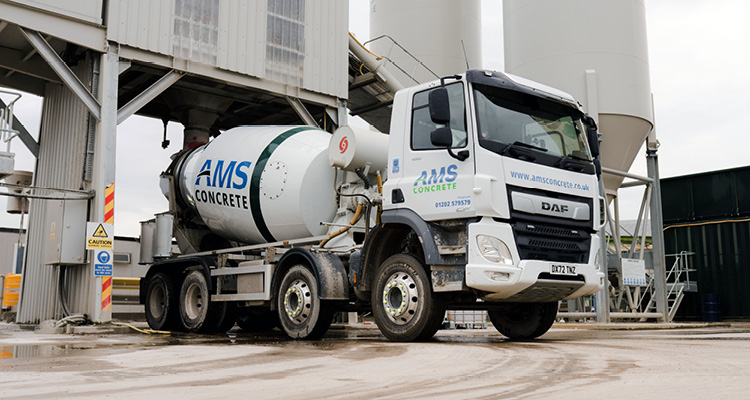
AMS’ new paperless platform caps a 30-year evolution from single haulier deal into full-cycle operator
As we head into Q4 of 2026, Avon Material Supplies (AMS) is preparing for another significant development. From September, the privately owned waste, concrete and aggregates provider will offer customers a fully paperless service, with electronic signatures, photo capture, and automatic ticketing all managed through a new Weighsoft customer portal. The move is well timed, coinciding with new UK Digital Waste Tracking requirements that will require waste information to be recorded digitally. The launch provides a fitting opportunity to reflect on a business that has spent more than three decades steadily developing into one of Dorset and Somerset’s most comprehensive providers of construction materials and waste services.
From humble beginnings in 1993, when Commercial Director, Stuart Mariner’s parents, Ian and Lyn, founded AMS and began sourcing aggregates and arranging cartaway services for contractors across Dorset and Hampshire, the family business has grown into a multi-million-pound operation employing more than 140 people and supporting hundreds of customers every month.
Starting without any assets of its own, AMS has grown into a full-service operation with its own concrete plants, recycling facilities, specialist vehicle fleet and workshop. Today, it provides contractors, businesses and members of the public with services covering aggregates, concrete, waste management, recycling, and haulage, backed by more than three decades of experience in the construction industry. A key turning point came around 2006–2007, when AMS took control of its own haulage operation. This marked the beginning of a period of investment that would see the business steadily build its own fleet, facilities, and services, while gaining greater control over the service it could offer customers.
“Not only did that give us some assets, but it also gave us more control because we weren’t beholden to other hauliers. It meant our customers could rely on us to provide a high-quality service, on time and on budget,” Stuart tells us.
Another significant step followed when AMS took operational control of Commercial Recycling, bringing two major waste facilities into the group – Canford Recycling Centre in Wimborne, Dorset, and Southwood Recycling Centre, near Shepton Mallet in Somerset.
“AMS became a complete package,” continues Stuart. “We could provide the haulage, while also providing the waste treatment and recycling.”
The company continued to expand, adding skip hire and roll-on-roll-off collections in 2016, followed by a concrete batching plant at Canford around 2020. In January 2024, AMS acquired Doonans of Weymouth, giving the business a second batching plant and greater coverage across West Dorset and the surrounding areas. More recently, the group completed a major, self-financed development of its own vehicle workshop.
“We’ve gone from basically having nothing to now owning multiple assets, sites and vehicles,” Stuart adds, summing up the journey so far.
A circular approach
Today, one of AMS’ key strengths is its ability to manage materials through different stages of the construction and waste cycle. Its tipper fleet can collect non-hazardous inert spoil from footings and groundworks and return it to Canford Recycling Centre, where it can be screened, washed and crushed. Recovered materials can then be turned into products including washed shingle in 10mm, 20mm and 40mm grades, grit, medium sand, Type 1 and 6F5 recycled aggregate.
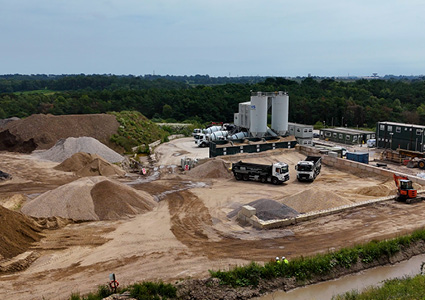
Much of this recycled material can also be put back to use within the business. Indeed, AMS produces BSI-accredited concrete across its two batching plants, using a combination of recycled and primary quarried aggregates. Producing concrete to the required specification involves carefully balancing those materials to ensure the finished product performs as required.
“Concrete is a very complex product, with a lot of variables involved,” explains Stuart. “Different applications require different strengths and slumps, so it’s about getting that mix right and making sure we can consistently produce concrete that meets the specification our customers need.”
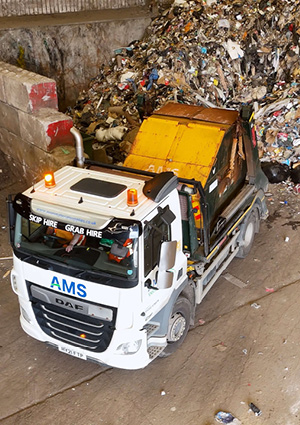
The waste collection side of the business follows a similar approach. AMS supplies skips and roll-on-roll-offs to construction, industrial and domestic customers for mixed and segregated waste streams, including plasterboard and wood, as well as hazardous materials such as asbestos, chemicals, oils, paints, and sealants.
“Any mixed waste skips are brought back to our own facility, rather than going to landfill or a third party, where we can screen the material and recover anything that can be recycled,” Stuart notes.
The result is a genuinely circular approach. A vehicle removing waste from a construction site could later return with concrete or recycled aggregate produced using recovered materials – keeping resources in use while giving customers access to collection, recycling, and supply through the same company.
Asked what has made this growth possible, Stuart points to AMS’ lean, family-led management structure and strong communication between the people making decisions and the teams delivering the work.
“We don’t have many levels of middle management,” he reveals. “If somebody comes to us with a good idea, we can say yes immediately and get busy implementing it. As a family, we’re actively involved day-to-day, we have a strong work ethic, and we always put our staff and our customers first.”
That ability to make decisions quickly has been matched by continued investment in the business. The recently developed workshop is one example, alongside a structured fleet replacement programme designed to keep AMS’ vehicles modern, reliable, and fit for the demands of its growing operation.
Another recent investment is the rollout of Weighsoft, bringing together three previously separate systems across the company’s weighbridge, waste, and haulage operations. As well as delivering the new paperless customer experience, the system will reduce manual data entry, improve the flow of information across the business, and help AMS meet changing regulatory requirements.
Looking ahead, Stuart is clear that future growth will remain considered and focused on AMS’ existing geographical footprint. Areas such as the New Forest, Southampton, Salisbury, and Yeovil offer natural opportunities to extend the company’s coverage without pursuing geographically distant acquisitions.
While further concrete plants or waste transfer facilities haven’t been ruled out, there are no immediate plans to pursue them. Instead, the priority is to keep improving what AMS already does – delivering more concrete, recycling more aggregate, and supplying more skips, while continuing to invest in greener technology, safety, and operational efficiency.
As Stuart concludes: “Our outlook primarily is to keep on doing what we’re doing – just better!”