Beyond scale and innovation, STARK UK is on a mission to fix the UK’s housing crisis
Behind almost every building site in the UK, from the pipes beneath the foundations to the chimney pots on the roof, there is a good chance STARK Building Materials UK (STARK UK) has played a part. As the UK arm of STARK Group, Europe’s largest distributor of heavy building materials, STARK UK was formed through an acquisition from construction leader Saint-Gobain in 2023 and reported a turnover of just under €2.5 billion in 2025, representing over 32 per cent of the wider group’s performance. With 7000 employees across 500 branches and hubs, and a heritage stretching back to 1814 through its Northern Ireland business JP Corry, STARK UK is a business built on expansion but shaped by something else – something Chief Logistics Officer Ranald Forbes describes as a fundamental responsibility to help solve the challenges facing British and Northern Irish construction.
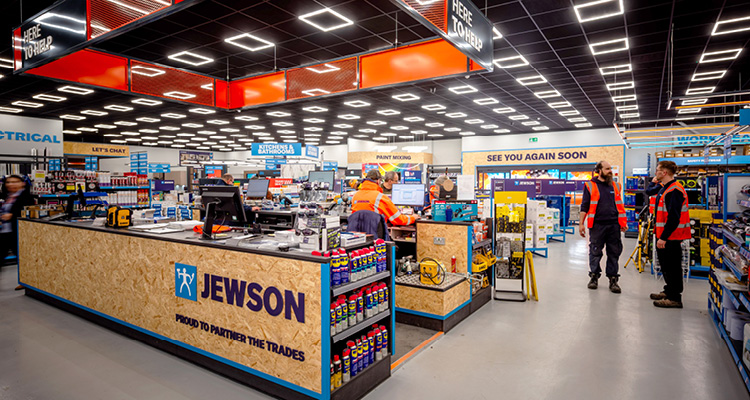
Stocking tens of thousands of specialist building products and services for professional builders and tradespeople, STARK UK is best known through its core brand and household name, Jewson. However, this is only one of the businesses in its portfolio. “Normans, based in Jersey, and JP Corry, based in Northern Ireland, offer similar solutions to Jewson on the mainland, but in the Channel Islands and Northern Ireland respectively. We also have Jewson Partnership Solutions (JPS), which supports social housing providers, Major Build Solutions (MBS), which distributes material solutions to major house builders through a set of regional distribution hubs, and Frazer, which provides specialist civils infrastructure products and services to utilities customers, such as water boards.” Dry lining product manufacturer Minster, and specialist timber provider International Timber, are also trusted partners.
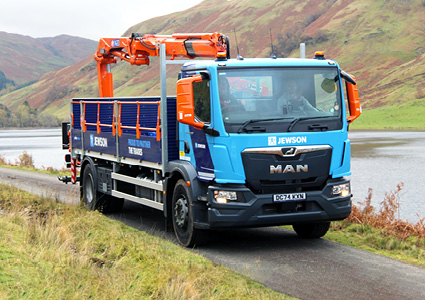
Over the past three years, STARK UK has developed many innovative technologies, with one of the most notable being customer experience-oriented: Last Mile Delivery. “This is an automated, real-time vehicle-tracking platform that gives customers delivery time windows and greater certainty around arrival times, removing the need for unnecessary contact with branches and offering more efficiency for our clients. There’s a safety aspect too, as it allows customers to prepare for materials arriving in advance and ensure space is available for the vehicle and unloading. Ultimately, the technology helps our customers manage their work schedules and teams more resourcefully, while also positioning our business as a trusted logistics partner.” Although this technology is commonplace in some sectors, he notes it is unusual in the building materials industry, giving STARK UK a significant competitive advantage. With Last Mile Delivery technology already extended to its JPS business, the company has integrated what3words technology into its ERP and driver mobile devices, which is important for frequent delivery to specific plot locations on a building site. “Using what3words alongside our plot-delivery capability has been a brilliant example of applying technology on the logistics side,” Ranald adds.
Championing the trades
Returning to Ranald’s earlier comments on STARK UK’s responsibility for supporting British and Northern Irish construction, he shares more about the company’s ‘Let’s Get Britain Building Now’ movement, launched recently to support and champion the trades. “In many respects, our construction sector is in crisis. The system is damaged and the gap seems to be widening. With a massive shortage of homes in the UK, we need to build around 565,000 homes a year to help resolve it, which is more than double the current rate. On top of that, thousands of empty properties across the country are ripe for retrofitting into quality affordable housing.” He points out the hurdles lie primarily in planning delays and the number of house builders going into liquidation since the 2008 financial crisis, along with a severe shortage of skilled craftspeople. “Construction currently has the highest vacancy rate of any UK sector, with many of those vacancies unfilled due to skills shortages. Yet builders generate additional GDP: for every pound invested in the sector, it generates three pounds, meaning there’s a big multiplier effect.”
This is where ‘Let’s Get Britain Building Now’ comes in. “We’re asking Parliament for financial incentives to help people buy or improve homes; faster, cheaper and more certain rules-based planning processes; incentives for careers in construction, and accelerated workforce training,” Ranald says. STARK UK’s suggested solutions include lowering both deposits for buyers and developer finance costs for construction projects, cutting upfront taxes such as stamp duty, accelerating skills programmes, reducing or removing VAT on both building materials and the retrofitting of vacant properties, making it easier for developers to work with housing associations through reform of Section 106 regulations, and fixing planning delays—which Ranald believes could quite possibly involve the use of AI. “So far, we have launched a petition, published on the government website, issued a State of the Nation report, setting out these challenges and solutions, and are amplifying builders’ voices by sharing their personal stories of struggle and also opportunity. We want to be heard loudly and publicly,” describing the campaign as a “collective endeavour to put the backbone back into the UK economy through construction”, aiming to shift it back into a sustainable and high-momentum position.
Sustainability strategy
Sustainability is firmly embedded in the way STARK UK operates and supports its customers. The company sees it not as a standalone initiative but as part of an overall effort to improve efficiency, reduce costs, manage risk and help clients navigate market expectations and changing legislation. “As one of the UK’s largest builders’ merchants, we have a responsibility to lead by example,” Ranald emphasises. “Our carbon emissions baseline was 2020, and we’ve reduced emissions by 20 per cent in the UK since then, with continued progress each year. Our company car fleet is now 92 per cent electric or hybrid; we’re investing £30 million in cleaner vehicle fleet models, and all our new branches use 100 per cent electric mechanical handling equipment.” Additionally, 100 per cent of the firm’s waste was diverted from landfill through 2025, and a remarkable 100 per cent of its electricity comes from zero-emissions sources. STARK UK is also committed to investing in people as well as environmental schemes. “Eighty percent of colleagues have been trained in sustainability, and we have 60 sustainability ambassadors across the UK business supporting the business with product solutions and fast-changing legislation. “We’ve also created ‘Building for the Future’ centres, such as the one in Luton, which give customers practical access to products and technical expertise around future building standards and legislation, including the Future Homes Standard, which is a big change for UK house builders.”
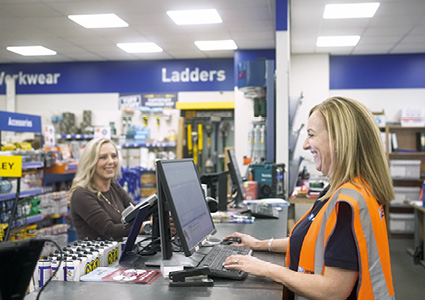
Asked where he’d like to see STARK UK in five years, Ranald enthusiastically shares his goal to become “the UK’s preferred builders’ merchant and materials distribution partner”, seeing the company as a clear industry leader. The ambition is about more than market share; it is tied to the wider recovery of the UK construction sector, which Ranald hopes will soon feel more confident and buoyant after STARK UK’s active campaigning over the last two years. Achieving this, Ranald says, rests on four factors: “Having the products to support growth, the logistics platform to provide the best delivery experience, a strong portfolio of businesses with innovative solutions, and an outstanding reputation built by our colleagues, through great community relations, delivering social value and demonstrating strong ESG credentials.”
STARK UK’s outstanding reputation is reinforced by its place within a much larger European family. The business’ access to technical expertise, a broad and efficient supply chain and exposure to different markets is combined with a shared set of values that runs across every country in the group: “decency, passion, and pride. We want to be the best for our customers, our colleagues and our communities,” he concludes. For a business built on scale, it’s a reminder that STARK UK’s ambitions for growth, sustainability and helping to solve the UK’s housing crisis are ultimately about people, not just products.