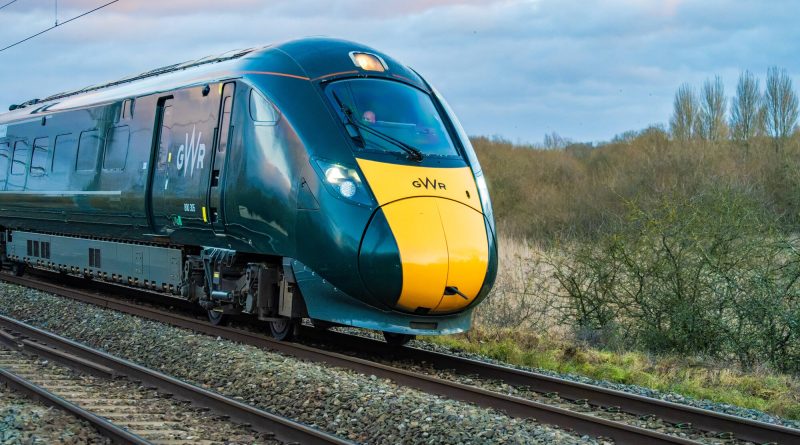
Bristol Brabazon station ends a 62-year wait for passenger trains
Subscribe to our free newsletter today to keep up to date with the latest construction and civil engineering news.
Bristol Brabazon station will open to passengers on Monday 23 November, bringing passenger trains back to the Henbury Line in north Bristol for the first time since 1964.
The station sits on the former Filton Airfield, where the new town of Brabazon is taking shape around the 20,000-capacity Aviva Arena, set to open in 2028. It is funded by the West of England Mayoral Combined Authority and the Department for Transport, and delivered by Network Rail and partners. The combined authority says it has invested £50 million across the project’s 2 construction phases.
Great Western Railway will start with an hourly service to Bristol Temple Meads, calling at Ashley Down, with a journey time of about 20 minutes. The first departure leaves at 07:10 on opening day, and trains will run more often as the development around the station grows.
For anyone watching UK infrastructure spending, the sequence is the more interesting story. The railway is arriving before most of the town it is meant to serve.
Rail is arriving before the new town is finished
Until now, the line through Henbury has carried only freight, and reopening it this early reverses the usual order of UK growth.
Most large housing schemes work the other way round. Homes go up first, residents move in and rely on cars, and public transport follows years later, if it comes at all. By then, travel habits are set and local roads are already under pressure.
Opening a station while Brabazon is still being built gives early residents a rail option from the first day. It also gives developers, employers, and investors a fixed piece of infrastructure to plan around.
The opening service is modest. An hourly train will not change how most people in north Bristol travel overnight. But the platforms, access, and rail connection are now in place, and adding trains is a far smaller job than building a station.
What remains open is whether the timetable grows at the same pace as the homes and jobs planned for the site.
A phased build keeps early costs in check
The station opens in a deliberately basic form. Phase 1 delivers 2 platforms linked by an accessible bridge, accessible parking, cycle storage, and car parking. It will be unstaffed at first, with a staffed ticket office to follow in The Interchange, an 8-storey office building that YTL Construction UK is building at Brabazon.
Phase 2 runs through to 2028 and is designed around event crowds. It adds a second footbridge with ramps, a staffed and gated ticket office, toilets, staff facilities, and a public square for visitors on event days. YTL UK, the developer behind Brabazon, has invested more than £24 million so far and plans a further £80 million over the next decade, according to the announcement.
Splitting the work this way avoids building for peak demand years early, and it shares the bill between public funders and the private developer whose site gains most from a rail connection.
The risk sits in the gap between the 2 phases. A 20,000-capacity venue produces sharp peaks on event nights, and an hourly, unstaffed station is not designed for them. The timing of phase 2 will matter.
Small reopenings are becoming the region’s rail model
Bristol Brabazon is among 5 new stations planned in the West of England as part of a £600 million rail investment, alongside Charfield, Henbury, Pill, and Portishead. Portway Park & Ride and Ashley Down have already opened in the region. Trains on the Portishead Line, due to reopen in winter 2028/29, will connect onto the Henbury Line.
The common thread is reuse. Rather than building new routes, the region is putting passenger trains back onto freight lines and closed alignments. That avoids much of the land purchase, consenting, and heavy civil engineering that drive costs on major schemes. While national projects such as HS2 have struggled with cost and delay, the West of England is betting on many smaller, cheaper interventions.
There are limits to the model. Reopened lines often share track with freight and long-distance services, which can cap how many local trains fit in. And an hourly service can struggle to persuade drivers to leave their cars at home.
Whether Brabazon becomes a template depends on what happens after opening day. Will Great Western Railway add trains as quickly as new residents arrive? Will phase 2 be ready before the Aviva Arena’s first sell-out night? And will the Henbury and Portishead connections turn a single new station into a cross-city network that people choose over the car?
The answers will shape how other UK regions make the case for small-scale rail.
Source:
West of England Mayoral Combined Authority