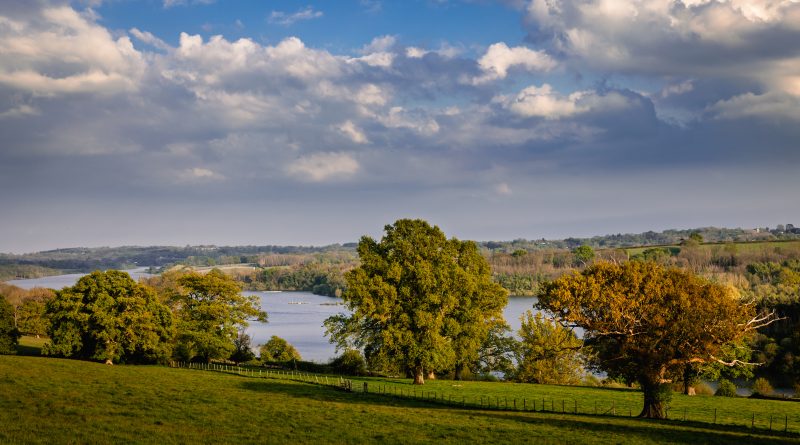
Britain’s biggest planned reservoir is moving from concept to reality
Subscribe to our free newsletter today to keep up to date with the latest construction and civil engineering news.
The White Horse Reservoir project near Abingdon has cleared another major regulatory hurdle, pushing one of the UK’s largest proposed infrastructure projects closer to formal planning approval. Thames Water and its partner utilities are now preparing a Development Consent Order application expected later this year, marking a critical stage for a scheme that has become central to Britain’s long-term water security strategy.
Formerly known as the South East Strategic Reservoir Option, the £7bn to £7.5bn project has steadily evolved from an abstract planning exercise into a nationally significant infrastructure proposal. The reservoir, planned across roughly 11.6 sq km of Oxfordshire countryside, is designed to support water supplies for up to 15 million people across London and south-east England.
Its scale reflects the mounting pressure facing the UK water sector. Regulators estimate England could face a daily water shortfall exceeding two billion litres by 2055 as population growth, climate pressures and ageing infrastructure intensify supply risks. Utilities and policymakers increasingly view large-scale storage projects as unavoidable after decades of limited reservoir construction across England.
The Regulators’ Alliance for Progressing Infrastructure Development, known as RAPID, confirmed the project had achieved a key gateway milestone allowing developers to move deeper into technical and environmental preparation work. Thames Water hopes the project will be construction-ready by 2029 and operational from 2040.
The advancement comes at a politically sensitive moment for the UK water industry, with utilities under scrutiny over sewage pollution, leakage rates and rising customer bills. Against that backdrop, the reservoir has become both a symbol of strategic resilience planning and a flashpoint for public opposition.
How the White Horse Reservoir became a strategic national project
Large reservoir schemes have become increasingly rare in modern Britain. The White Horse Reservoir would represent one of the country’s most ambitious water infrastructure developments in decades, reflecting a sharp shift in how regulators and utilities approach long-term supply resilience.
The project originally emerged through the South East Strategic Reservoir Option programme, developed jointly by Thames Water, Affinity Water and Southern Water. The aim was to create a large-scale storage asset capable of redistributing water across one of Europe’s most densely populated regions during periods of drought stress.
The recent rebranding to White Horse Reservoir appears designed to soften public perception and strengthen local identity. Thames Water said the new name reflects local heritage and surrounding natural landscapes, though critics argue the project’s scale makes community acceptance difficult regardless of branding.
The reservoir’s economics also underline the broader shift taking place across UK utilities infrastructure. Water companies are increasingly under pressure to invest heavily in long-term resilience assets after years of criticism that shareholder returns were prioritised over system upgrades. Reservoirs, desalination facilities and regional water transfer systems are now moving higher up investment agendas as climate forecasts worsen.
Industry observers also view the project as part of a wider evolution in UK infrastructure planning. Unlike transport or energy projects, water infrastructure has historically struggled to attract political momentum despite rising environmental risks. That dynamic is beginning to change as drought warnings become more frequent and the south-east’s population continues to expand.
For contractors, engineers and supply chain specialists, the White Horse Reservoir could become one of the defining civil engineering programmes of the next two decades. Large-scale earthworks, tunnelling, pumping systems and environmental mitigation packages are expected to generate significant procurement opportunities once planning approvals progress.
Why Britain’s water sector is entering a new era of infrastructure spending
The reservoir’s progression reflects deeper structural problems within England’s water network. Population growth across southern England continues to increase demand while climate projections suggest hotter summers and longer dry periods will reduce available water resources.
The Environment Agency has repeatedly warned that parts of England could run short of water within decades without major intervention. Utilities have responded by accelerating plans for reservoirs, water recycling schemes and inter-regional transfer networks designed to create greater flexibility during supply stress events.
This marks a major reversal from previous decades, when water companies largely focused on incremental upgrades rather than transformational capital projects. Political pressure is also increasing. Policymakers are now framing water resilience as an economic and national security issue rather than solely an environmental concern.
RAPID’s involvement illustrates how regulatory structures are evolving to support faster delivery of nationally significant infrastructure. The alliance, which includes Ofwat, the Environment Agency and the Drinking Water Inspectorate, was established specifically to accelerate large-scale supply projects while maintaining environmental scrutiny.
The White Horse Reservoir has therefore become more than a standalone scheme. It now represents a test case for how quickly Britain can deliver complex climate adaptation infrastructure while balancing public resistance, environmental concerns and affordability pressures.
Environmental resistance is unlikely to disappear as planning advances
Despite regulatory momentum, opposition to the project remains substantial. Campaign groups and local residents have raised concerns over ecological damage, landscape transformation and the long-term impact on surrounding communities.
Countryside charity CPRE Oxfordshire and campaign group Safer Waters sought a judicial review challenging aspects of the scheme, arguing the development could devastate local ecology and livelihoods. The High Court dismissed the challenge, but opposition groups continue to question both the environmental justification and the project’s financial burden.
Funding remains politically delicate because customers of Thames Water, Affinity Water and Southern Water are expected to contribute through their water bills. That creates additional sensitivity at a time when household costs remain under pressure and public trust in water companies remains fragile.
Environmental debates are also becoming more complex across infrastructure planning generally. Utilities increasingly argue that major projects are essential for climate adaptation, while opponents question whether environmental damage caused by construction undermines wider sustainability goals.
For Thames Water, the reservoir carries reputational importance alongside operational necessity. Delivering a project of this scale would demonstrate long-term strategic investment after years of criticism surrounding financial instability and operational performance.
The next phase will determine whether White Horse Reservoir can successfully transition from contested proposal to nationally backed infrastructure programme. If it does, the project could reshape expectations around how Britain prepares its water systems for an era of climate pressure and rising demand.
Source