Cornwall’s lithium push moves closer to a commercial test
Subscribe to our free newsletter today to keep up to date with the latest construction and civil engineering news.
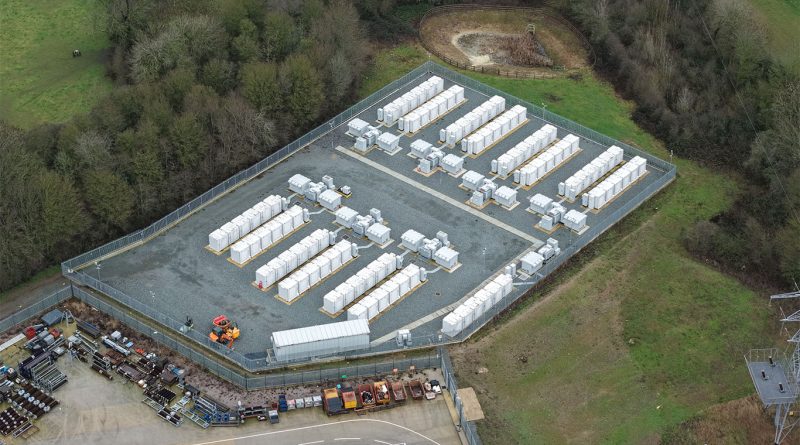
Sean Carr Lining Technology has completed a specialist lagoon liner at Cornish Lithium’s Cross Lanes Geothermal Lithium Project near Truro, marking another step towards drilling and testing at one of the UK’s most closely watched critical minerals schemes. The lagoon will temporarily store water brought up from deep underground before it is returned below the surface.
The work is modest in physical scale compared with the mines, gigafactories and energy projects often associated with the transition to electric transport. Yet it matters because it represents the enabling infrastructure needed before commercial decisions can be made.
Cornish Lithium plans to drill two additional wells at Cross Lanes to assess the lithium content of geothermal waters circulating beneath parts of Cornwall. The company says the results will help inform a final investment decision and support plans for modular geothermal lithium production facilities in the county.
A small milestone with wider significance
The completion of the lagoon liner highlights an important feature of critical minerals development. Projects are often judged by their eventual production targets, but progress depends on a sequence of technical, environmental and financial steps.
For Cross Lanes, water management is central to the project. Geothermal lithium extraction involves accessing mineral rich brines below ground, testing their composition and returning water underground after processing. Temporary storage therefore has to meet high environmental and technical standards.
That is why a specialist contractor such as Sean Carr Lining Technology has become part of the story. The St Asaph company has more than 30 years of experience in geosynthetic lining projects and was selected for work that Cornish Lithium described as a critical piece of infrastructure.
For the UK supply chain, the contract also illustrates how emerging clean technology projects can create opportunities beyond the headline developer. Engineering specialists, civil contractors, environmental consultants and equipment suppliers are all likely to play a role if domestic lithium production moves from exploration to commercial scale.
Why lithium has become a strategic priority
Lithium has become one of the most important materials in the global energy transition. It is used in batteries for electric vehicles, consumer electronics and grid storage, making secure access to supply increasingly important for governments and manufacturers.
The UK government’s Vision 2035 critical minerals strategy identifies domestic production as part of a wider effort to strengthen industrial resilience and reduce exposure to fragile international supply chains. The strategy highlights the South West, including Devon and Cornwall, as one of England’s areas of critical mineral strength.
That policy context helps explain why Cornish Lithium has attracted public finance. The National Wealth Fund announced up to £31 million of support for Cornish Lithium projects, including funding to progress Trelavour towards a construction decision and Cross Lanes towards commercial drilling.
The economic case is clear. If Cornwall can support viable lithium production, it could help create skilled jobs, attract investment and strengthen the UK’s position in battery supply chains. It would also revive a region with deep mining expertise at a time when industrial strategy is again focused on domestic capability.
The test is now commercial
The next challenge is whether the technical promise can be converted into investable projects.
Globally, lithium markets have been volatile, with prices rising sharply during the electric vehicle boom before falling as supply expanded and demand growth moderated. That has made investors more selective and increased pressure on new projects to demonstrate cost competitiveness.
Cornish Lithium is pursuing two routes: geothermal brines and hard rock resources. That gives the company optionality, but it also means each project must prove its own economics, environmental case and route to market.
The Cross Lanes project is significant because geothermal lithium extraction could offer a lower impact model than traditional mining if it can be scaled successfully. Its smaller surface footprint and potential alignment with geothermal energy make it attractive in principle, but investors will want evidence from drilling, testing and engineering studies before committing larger sums.
For business leaders, the lesson is that the battery supply chain will not be built through single announcements. It will emerge through incremental progress: enabling works, test facilities, funding rounds, planning approvals and final investment decisions.
Sources