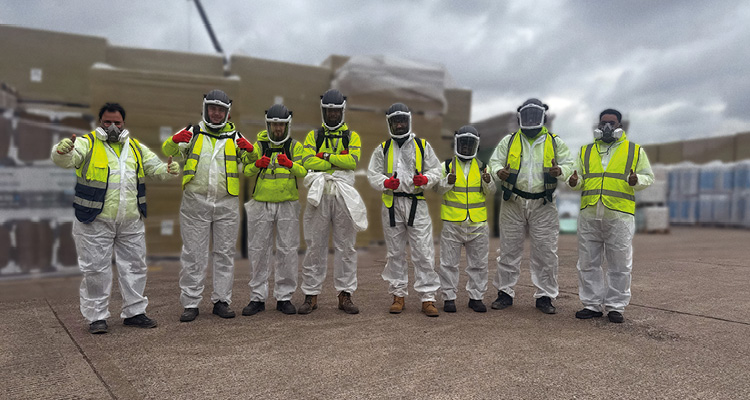
Discover how SWIP prepared itself to navigate a challenging period in the solid wall sector
Combining nationwide reach with significant scale and operational control, SWIP has grown into a leading retrofit partner and materials supplier. Its integrated model across insulation systems, fabrication, and logistics provides suppliers with rapid, coordinated and reliable delivery.
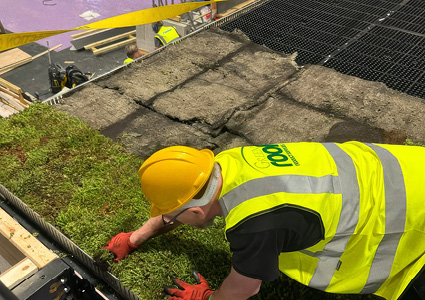
“My business partner and I founded SWIP around 15 years ago, with a sole focus on the solid wall insulation industry, specifically bringing internal wall insulation systems to the market,” begins Craig O’Donnell, Group Commercial Director. “Back then, the industry was addressed through government schemes such as CESP and ECO. Over the years, as we grew, the business evolved into a group of companies that both support the SWIP infrastructure and operate as standalone businesses. SWIP itself is a system designer for the retrofit market, supplying internal wall insulation, room in roof insulation, underfloor insulation, and a range of solutions for older properties, all backed by a 25-year warranty. Alongside that, we have a fabrication company called PSCM Insulation and Fabrication, which manufactures the products required for our insulation systems and offers standalone fabrication services to the wider construction industry. There is also Green Roof Product Supplies (GRPS), through which we distribute an innovative, lightweight green roof system. And finally, we have CDP Transport Solutions, a transport business providing logistics for SWIP and PSCM as well as its own customers.”

SWIP’s most significant period of growth has come in the past six years, driven by regulatory change and market opportunity. In 2020, the requirements under government and energy company schemes shifted from a two-year warranty on certain products to a 25-year warranty. Having built its room in roof and underfloor insulation systems around a 25-year warranty from the outset, SWIP was already well positioned to help drive that change. The warranty requirements within government-led schemes are notably complex: not only must companies provide a 25-year product warranty, but the installers fitting these products must also hold the relevant qualifications, such as PAS 2035 and the appropriate NVQs, along with third-party accreditation to guarantee the quality of workmanship. As a result, only three companies in the UK are able to offer the fully packaged 25-year warranty scheme. SWIP was able to demonstrate compliance early, giving it a significant competitive advantage as demand grew.
ECO 4 scheme
The broader industry shift towards internal wall insulation compounded that advantage. Solid wall insulation was a central part of the ECO 4 scheme, which has recently come to a close. Additionally, over the past four years, the industry has increasingly recognised that internal wall insulation is easier to install than external wall insulation – more discreet within existing properties and capable of covering more properties for the same budget. “Because we have a unique, market-leading internal wall insulation system, we have seen organic growth through the ECO 4 scheme,” Craig explains. “We delivered material for just under 30,000 properties under that scheme, considering that the whole scheme delivered around 45,000. Moreover, we supplied over two-thirds of all materials into ECO 4, which no other system designer has come close to.”
Given that ECO 4 has effectively ended since April 2026, things are changing for SWIP and the industry as a whole. Craig is frank about the scale of the challenge and how the group is preparing for what lies ahead. “Eighteen months ago, our board could see that the solid wall sector was going to face a transitional period, so we began growing our other businesses deliberately. As every business within the group, aside SWIP, operates independently of government or energy company funding, we made it a priority to ensure those businesses were financially strong enough to carry the group through the end of March. This was especially important to us as we have just under 60 employees and recognise it is our responsibility to make sure they are paid every month. The sudden closure of ECO 4 has had a massive impact not just on us, but across the entire supply chain, resulting in an estimated 80,000 redundancies across the sector this year. For context, we had around 500 installing companies on our approved contractor network this time last year. By July, if nothing changes, only around ten per cent of those will still be trading. Many of those businesses have no other revenue streams; they went all in and relied on the government introducing a replacement scheme in time.
“Since then, the Warm Homes Plan has been introduced, but the social housing providers tasked with delivering it are nowhere near ready to operate at scale. It is the first time in 30 years that there is no active government-led scheme helping to alleviate fuel poverty. It is very tough out there, and I will not pretend we have not felt it, because we have. But we have not had to make any redundancies or scale back, because the contingency planning we put in place has allowed our technical and sales teams to transition across to our other businesses. We are still selling and applying the knowledge and relationships built through ECO 4 to the Warm Homes Plan. That transition will probably take nine to twelve months to fully reset from a technical standpoint, but we see the Warm Homes Plan as a great opportunity for the industry. The real question is how many system designers and installers will still be around by the time that scheme reaches scale,” he expands.
Despite the turbulence in the market, SWIP has continued to invest in its products, processes, and credentials. Over the past year, the group has invested in product research and development, performance testing, and new machinery, producing tangible improvements for customers across its businesses. Alongside that, SWIP recently achieved two ISO accreditations: ISO 14001 for environmental management and ISO 9001 for quality management. The group is now working towards ISO 45001 for health and safety. “The ISO accreditations help us streamline our work processes and signal to customers that we operate to a high standard. We are also working towards CE marking across many of our fabrication products. Investments in new machinery have enabled us to develop capabilities like cut-to-falls roofing, which delivers real labour savings for our customers by allowing us to fabricate products in our factory that would otherwise require work on-site. Meanwhile, GRPS now offers the lightest green roof solution available in the UK, benefiting our installers by reducing transportation costs and CO2 emissions,” Craig concludes.
By planning ahead and building a genuinely diversified group, SWIP has navigated one of the most turbulent periods its industry has ever seen without losing a single member of staff, a testament to the effectiveness of its strategy.