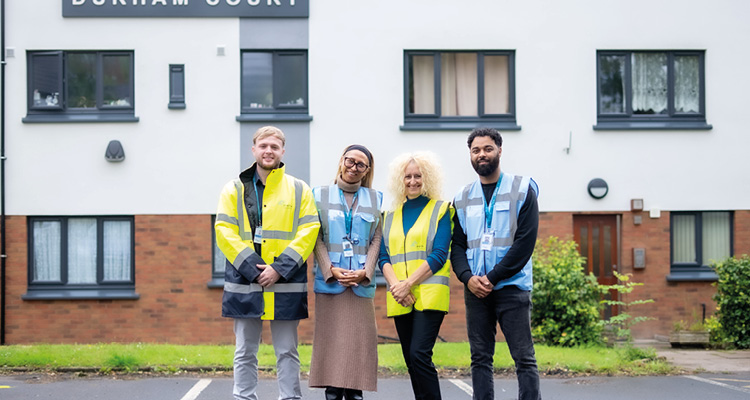
Fortem delivers a large-scale housing upgrade in Birmingham, reshaping retrofit standards through a people-first approach
Across the UK, housing providers are rethinking how they invest in existing homes, aligning energy performance, safety and asset management in ways that were previously handled in isolation. Retrofit programmes are at the heart of this change, uniting design, delivery and resident engagement on a large scale. For Fortem Solutions (Fortem), this approach is now central, with the Birmingham project showing how programmes can deliver results without disrupting residents and their homes.
As part of the Willmott Dixon Group, Fortem provides repairs, capital works, high rise cladding remediation and retrofit services for social housing clients across England. Working with 16 local authorities and housing associations and managing 350,000 repairs each year, the business combines planned and compliance work with an expanding retrofit offer. Its ‘FOR Our Future’ strategy sets out growth targets that put retrofit alongside digital systems and service delivery, with an ambition for zero-carbon housing by 2030.
Within this framework, retrofit has shifted from a specialist function to a core service. Fortem’s programmes now connect data, technical design and resident input. The Middle Park Estate project in Birmingham brought funding, planning and delivery together as one integrated scheme.
Middle Park model
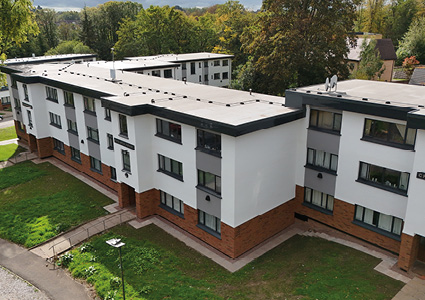
Fortem supported Birmingham City Council in securing £24.8 million from the Social Housing Decarbonisation Fund, including £12.5 million invested directly in Middle Park Estate. The overall programme reached £32 million and covered 415 flats across 32 blocks, with all work completed while residents remained in their homes.
The project included external wall insulation, roof and window upgrades, fire safety improvements, ventilation systems and communal heating. Fortem also enclosed balconies, installed fire-rated doors, kitchens and bathrooms, heating installations, communal renovations, landscaping and redesigned bin storage, integrating all workstreams into a single delivery plan rather than handling each element separately.
Four principles shaped the work: a resident-first approach, evidence-led design, a clear ventilation strategy and structured quality assurance. These were applied from initial engagement through to completion, with retrofit activity coordinated alongside planned kitchen and bathroom upgrades to avoid repeat disruption.
Resident engagement was part of daily delivery. Four liaison officers worked closely with households throughout the programme, providing newsletters, meetings, digital updates and site visits. When some residents raised concerns, the team enhanced communication and increased direct engagement.
Delivery was planned at the property level to accommodate residents staying in their homes, with schedules tailored to individual needs and every home left ready for use at the end of the day. Ongoing feedback led to smooth delivery and resulted in a 97 per cent reported satisfaction rate.
Delivery systems
Technical delivery combined modelling, inspection and digital monitoring. Thermal bridge calculations informed design at risk points, while ventilation assessments addressed moisture and air quality from the outset. The in-house technical team and retrofit coordinators reviewed installations and inspections beyond required audit levels, building oversight into each stage of delivery.
FieldView software tracked and captured evidence across the supply chain, creating a shared system for installation checks. Fortem’s Connect project management platform gave Birmingham City Council access to data on scheduling, approvals and post-installation reviews, keeping the whole programme transparent and supporting the compliance record.
Assessments and designs were not fixed at the outset. Project teams reviewed documents throughout, refining assessments as new information emerged and ensuring that learning shaped delivery in real time rather than being left until project completion.
Fortem trialled smart sensors in 100 properties to monitor humidity, temperature and air quality. The data helped identify damp and ventilation risks early, informed future design decisions, and connected building performance with resident conditions in real time.
Kitchens, bathrooms and heating systems were installed alongside insulation and ventilation measures, ensuring a whole property focus that reduced repeat visits and linked improvements to long-term performance.
Measured impact
The programme delivered tangible results across energy, maintenance and resident experience. On average, households saw energy bills fall by £332, and each home now saves over four tonnes of carbon emissions annually, with reduced heat loss and improved fabric performance across the estate.
Reports of damp and mould dropped by over 70 per cent, driven by ventilation improvements and targeted interventions. Data analysis identified 23 properties with longstanding issues, with retrofit work addressing root causes rather than symptoms. Demand for repairs fell by more than a third.
Fortem tracked waste management and site operations. Over 99 per cent of waste was diverted from landfill, and there were no reportable safety incidents. These results complement resident satisfaction and technical performance in the wider programme record.
Training and workforce development supported delivery throughout. Through its partnership with The Retrofit Academy, Fortem enrolled staff and partners in PAS 2035 qualifications across multiple levels, with on-site workshops and shared standards aligning the supply chain with regulatory requirements and installation practices.
Leadership focus
For Fortem’s leadership team, programmes such as Middle Park reflect the organisation’s evolving position within the sector. Retrofit brings together compliance, customer service and technical delivery, with leadership roles now spanning all three and linking operational decisions to resident outcomes and asset performance.
Maintenance data informed decisions about where deeper intervention is needed, enabling programmes to target properties with recurring issues, from damp to structural deterioration.
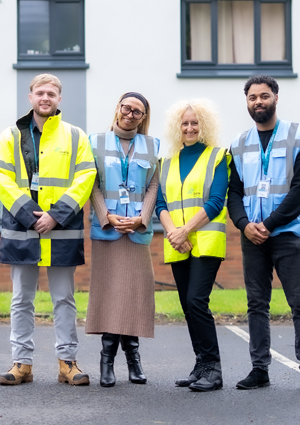
Internally, development remains linked to delivery. Through its Pathways4Life programme, Fortem supports apprenticeships, work experience placements and community engagement connected to project activity. Its ‘Blue Books’ outline internal standards for design, installation and engagement, with regular audits and events keeping those standards current as projects progress.
Supply chain partners operate within shared systems, contributing to documentation and compliance records, with training and accreditation opportunities extending across the wider delivery network.
Forward outlook
Fortem’s inclusion on a £660 million decarbonisation framework places it within a growing pipeline of retrofit work. As funding programmes expand, delivery models such as Middle Park will serve as blueprints for future schemes, with data-led design, integrated planning and resident engagement now forming part of baseline expectations.
Future programmes will prioritise measurable outcomes across the life of assets. Monitoring systems, maintenance data and resident feedback will shape how projects are assessed beyond completion, with digital platforms playing an increasingly central role in that process.
The work in Birmingham shows how design, delivery and resident experience can come together within a single programme. The lessons learned translate directly into what comes next.
Wayne Davies, Director of Asset Management at Birmingham City Council, says: “The Middle Park Estate has been a success for our residents from a retrofit perspective, and the wide-ranging refurbishment work we’ve undertaken. The estate has been completely transformed and is now set to provide the best homes for generations to come. The delivery with Fortem provides a great example of what can be achieved by working together.”