From water specialist to infrastructure powerhouse, United Infrastructure charts its next phase of sustainable growth
With more than 2500 people across the UK, United Infrastructure delivers the critical infrastructure that communities up and down the country rely on every day. Across the group’s utility infrastructure and social infrastructure businesses, the company brings together specialist expertise spanning water, power, energy, telecoms, and social housing to provide practical, innovative solutions for both public and private sector clients.
By bringing together established businesses – AFECO, Peter Duffy Limited, Jones, Glenelly, GTEC Training, PiLON and Simkiss Control Systems Limited – United Infrastructure is creating a stronger, more connected group with the scale, skills, and specialist knowledge to tackle some of the UK’s most complex infrastructure challenges. Since day one, United Infrastructure has been driven by a clear ambition: to broaden its capabilities, deepen its expertise and give clients access to more of the solutions they need. By adapting to changing market conditions and pursuing strategic acquisitions, the company has steadily expanded its offering, creating a single, trusted infrastructure partner.
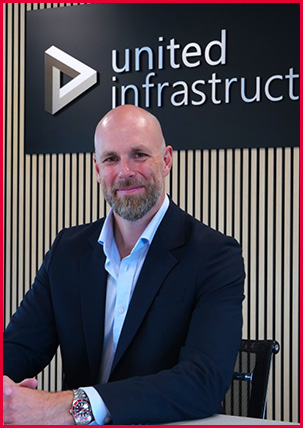
“The business was initially founded under the name of Fast Flow in 2005 by our Chairman and CEO, Neil Armstrong,” begins Campbell Crawford, Managing Director. “Fast Flow was a specialist repair and maintenance provider to the water industry, initially working with Northumbrian Water. In 2014, the business entered the property services sector, acquiring a company called DW Services. Five years later, Fast Flow joined forces with another property services company, United Living, and together became United Living Group. In 2021, we completed our strategic acquisition of GBC (Great British Communications) to enter the telecoms market, and, in 2023, we secured private equity investment from Apollo Global Management.
“Since that investment from Apollo, we’ve made several more acquisitions,” he continues. “These include AFECO, a water and wastewater mechanical electrical instrumentation and controls company, Peter Duffy Limited, which is a civils provider within the wastewater industry, Jones, a low voltage street lighting provider, and Glenelly, a cable jointing business working nationally for multiple Distribution Direct Network Operators. Most recently, we acquired Wood UK’s power transmission and distribution business, and Simkiss, which provides system solutions to many of the utility industries that we work in.
Over time, the expansion of United Infrastructure’s capabilities has opened the door to new opportunities across a diverse scope of UK industries. Building on a combination of existing strength in the utilities sector and the capabilities gained through acquisitions, the group now has a market leading capability in the power transmission and distribution sector. This strategic move reflects both the natural evolution of the business and the growing demand for the specialist infrastructure needed to support the UK’s clean energy transition and continued investment in areas such as data centres.
“We’ve just aligned the recently acquired power transmission and distribution (T&D) division within the body of United Infrastructure. We were already very well-established in utilities on all fronts, so establishing a footprint in the power industry strategically complemented our overall offering,” Campbell elaborates. “Transmission and distribution are very difficult sectors to enter because of the complexity of work and extensive training requirements. Our previous acquisition of Jones and Glenelly allowed us to enter the low voltage connections, cabling, and jointing markets; they are two great businesses with really strong capabilities and customer bases that integrated well into United Infrastructure and now align perfectly whilst complementing seamlessly with T&D.
“Stakeholders are investing heavily in transmission providers and distribution operators in order to drive the clean energy transition, and we’re seeing an ever-increasing demand with more data centres being built throughout the UK, so it’s a super exciting time for us.”
Investing in people
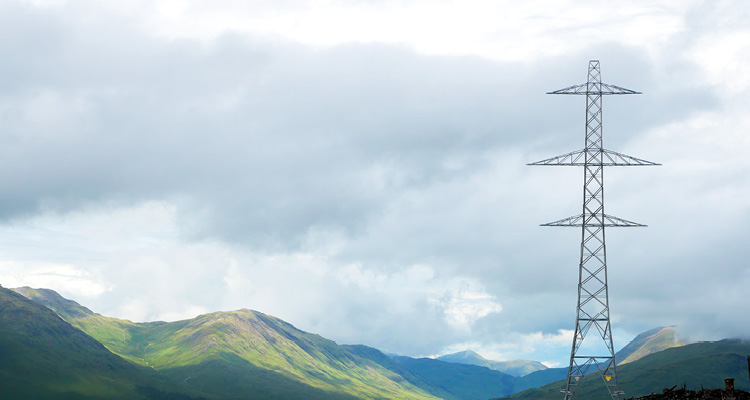
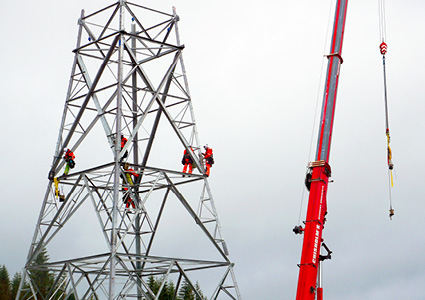
As the UK accelerates towards a low-carbon energy system through the government’s Clean Power 2030 Action Plan, United Infrastructure is helping to deliver that transformation, The group offers end-to-end capability spanning engineering and design through to construction, commissioning, and maintenance of electrical networks, supporting major network operators such as SSEN Transmission, National Grid, SP Energy Networks, and UKPN. The division’s transmission capability encompasses the new build and refurbishment of overhead lines up to 400kV, tower and pylon installation and modification, underground transmission cable installation and replacement, renewable generation and major infrastructure connections, and large-scale network upgrade programmes. Across distribution, it delivers DNO framework support, network reinforcement, new grid connections, substations and switchgear, underground cable installation and jointing, testing, commissioning and maintenance, LV overhead lines, network diversions, and new electrical connections.
This expertise is particularly important as the UK’s electricity networks evolve to accommodate increasing volumes of renewable generation. Through this division, United Infrastructure is translating this wider commitment into practical infrastructure delivery, helping to strengthen and expand the networks needed to connect low-carbon generation and meet growing demand.
“Our T&D pillar is playing a key role in supporting the UK’s energy transition,” Campbell affirms. “As the country increases its reliance on renewable power generation, we’re supporting that transition through the construction and upgrade of substations, overhead lines, underground cable systems, and wider transmission and distribution infrastructure. For me, our role as a business is focused on connecting the low carbon generation, expanding the transmission distribution network, and delivering that infrastructure safely and efficiently.” In short, there is no energy transition without electrical transmission.
Delivering this critical infrastructure depends on the technical skills and expertise of the people behind it. As United Infrastructure continues to support the UK’s energy transition, it recognises that investing in its people is equally important to ensuring it can meet the evolving needs of its clients and the wider energy sector.
Through ongoing investment in training and professional development, the group equips its teams with the skills, confidence, and expertise to reach their full potential and deliver the best outcomes for clients. Simultaneously, the company’s apprentice and graduate programmes also play an important role in developing the next generation of talent, supported by the experience, guidance, and mentorship of its senior teams.
“The skills shortage is a huge challenge for both the industry and the country,” Campbell says. “As a group, we have multiple training facilities across the UK, including a training centre for working at height in Darlington. We have towers erected in that centre and work with educational facilities on a full syllabus to educate apprentices. Right now, we’re actively working with The Highland Council and SSEN Transmission to establish a similar facility in Scotland, which we anticipate will be operational within the next 12 months.”
Major project pipeline
In terms of recent and ongoing projects, United Infrastructure is already playing a significant role in strengthening Scotland’s electricity network through a number of major transmission projects. For SP Energy Networks, the group was awarded the Kendoon to Tongland 132kV Reinforcement Project, replacing an 80-year-old electricity transmission network across approximately 44 kilometres in Dumfries and Galloway. The project will reinforce the network in the area, strengthen the resilience and capacity of the regional network.
Alongside this, the company is also delivering a 132kV underground cabling project for SSEN Transmission as part of the High Constellation Wind Farm Connection project in Argyll and Bute. Connecting the wind farm to the Crossaig substation via underground cable, the project will support the integration of renewable energy to the grid.
Elsewhere in the Scottish Highlands, United Infrastructure has completed the early contractor engagement phase of an Accelerated Strategic Transmission Investment (ASTI) project and is now progressing into design. The project includes the installation of a new 400kV overhead line with over 230 new towers, further demonstrating the group’s growing role in delivering the major infrastructure required to support the UK’s low-carbon energy future.
United Infrastructure’s evolution from a specialist water and maintenance provider into a diversified infrastructure group reflects a clear ambition to build the scale, expertise and capabilities needed to support the UK’s changing infrastructure demands. The company’s expansion into power transmission and distribution represents a natural next step, positioning the business to play an increasingly important role in connecting renewable generation, strengthening the electricity network, and supporting the country’s transition to a low-carbon energy system.
Safety, quality, and delivery
With major projects underway across the UK, continued investment in its people and training infrastructure, and a growing portfolio of specialist capabilities, United Infrastructure is well-positioned for the opportunities ahead. By combining technical expertise, national scale, and a strong commitment to safe and efficient delivery, the group is not simply responding to the UK’s infrastructure, but helping to build the networks, skills, and capabilities that will underpin the country’s future.
“For me, being the UK’s leading transmission contractor means being the first name on our customers’ lips when looking at a new project. Achieving this status means placing a relentless focus on safety, quality, delivery, and value for money – project after project and year after year. We have an incredibly talented, experienced, and dedicated team, and I have no doubt that our leaders will maintain that culture as we continue to grow across all disciplines,” Campbell emphasises.
“The UK industry has a lot of challenges to tackle. The country is faced with unprecedented investment across all its infrastructure across all disciplines, and it’s incumbent on all providers in the sector working together to overcome these challenges. We’re well-established with plans in place to ensure that we grow sustainably. The future requires us to overcome significant challenges but doing so presents so much opportunity. Tackling this head on is, in my opinion, the joy of the job!”
For United Infrastructure, the next chapter is one of ambitious but sustainable growth. With an expanding T&D capability, a growing pipeline of major projects, and continued investment in the skills of its people, the group’s success continues to be driven by technical expertise, safety, and quality with collaboration across the industry. Without doubt, it’s clear that United Infrastructure is playing its part in delivering the resilient, connected, and low-carbon infrastructure that the UK needs for the future.