GFRP vs. Steel: The Corrosion-Free Alternative Gaining Ground in Warehouse Reinforcement
Distribution centers face persistent challenges with welded wire mesh in warehouse floor slabs. Traditional steel reinforcement is vulnerable to electrochemical corrosion in chloride-rich environments and presents placement difficulties during construction.
Glass fiber-reinforced polymer (GFRP) mesh and synthetic macro fibers now offer corrosion-free alternatives. The best reinforcement fibers for distribution center warehouse flooring depend on traffic loads, environmental exposure and life cycle cost considerations.
How Synthetic and Glass Fiber Options Are Challenging Traditional Steel Mesh
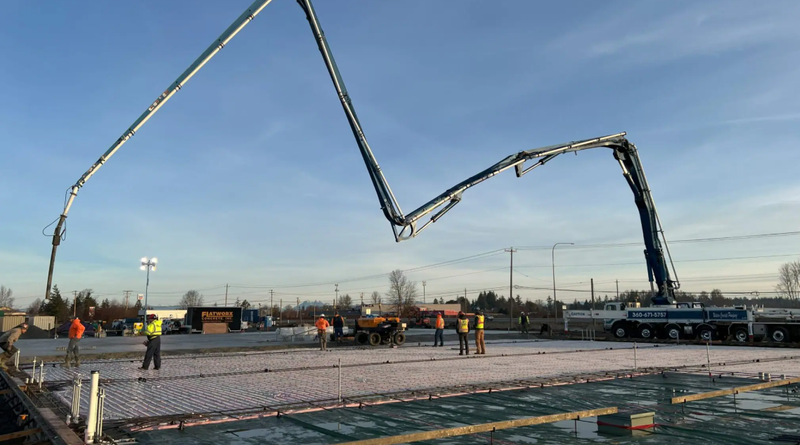
Traditional welded wire mesh has dominated warehouse floor reinforcement for decades, yet it comes with inherent limitations. Steel mesh arrives in heavy rolls that require multiple workers for placement and can shift during concrete pours. More critically, steel is susceptible to electrochemical corrosion when exposed to chlorides from deicing salts or industrial chemicals.
Modern alternatives address these weaknesses directly. GFRP mesh uses composite materials that are entirely corrosion-resistant. Synthetic macro fibers disperse throughout the concrete mix as discrete elements, eliminating the need for manual placement of large mesh sheets. As of 2026, the GFRP market is estimated at $74.52 billion and is expected to grow to $94.70 billion by 2031, reflecting increased adoption across infrastructure projects.
What Reinforcement Fiber Options Exist for Distribution Center Floors?
Three primary reinforcement systems serve distribution center applications. Each offers distinct performance characteristics for crack control, installation efficiency and long-term durability.
| Reinforcement Type | Corrosion Resistance | Weight | Installation | Crack Control | Best Applications |
| Steel Fibers | Low (vulnerable to rust) | Heavy | Labor-intensive placement | Excellent post-crack strength | High-load industrial floors |
| GFRP Mesh | Excellent (nonmetallic) | Lightweight | Moderate placement effort | Comparable to steel when properly designed | Chloride-exposed environments |
| Synthetic Macro Fibers | Excellent (polymer-based) | Very lightweight | Mix directly into concrete | Good crack control at proper dosage | General distribution centers |
GFRP provides an edge in chloride-rich environments where deicing salts or chemical exposure occur. According to testing by composite manufacturers, GFRP maintains its tensile strength and elastic modulus without degradation from electrochemical reactions. When properly designed with adequate fiber volume, GFRP delivers crack-control performance comparable to that of traditional steel reinforcement.
A structural performance study from 2025 found that “The load capacity similarities between GFRP-bar-reinforced GFRC slabs and steel-reinforced slabs are 69% for crack loading and 86% for ultimate capacity.” It also emphasizes the “potential of GFRP as an effective alternative to steel reinforcement, contributing to the development of resilient and durable concrete structures in demanding environments.”
Can Synthetic Fibers Replace Welded Wire Reinforcement in Distribution Centers?
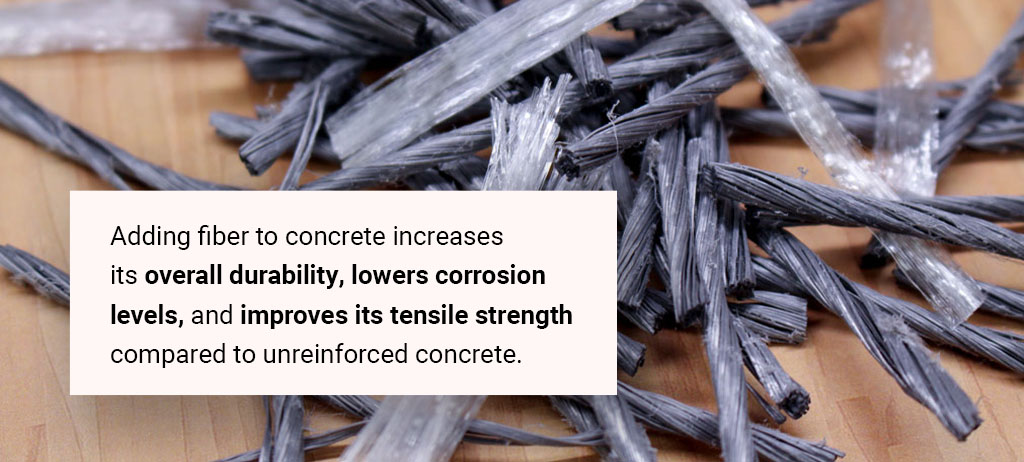
With appropriate dosage rates and engineering design, synthetic fibers successfully replace welded wire mesh in many distribution center applications. The key lies in matching fiber properties to expected loads and ensuring proper dispersion throughout the concrete matrix.
Industry manufacturers with engineering capabilities play a critical role in this transition. FORTA, which has operated in the synthetic reinforcement sector since 1978, maintains active membership in industry associations, including The Associated General Contractors of America, American Society of Concrete Contractors, and ASTM International. The company has received recognition from the American Concrete Pavement Association, including the National Award for Excellence in Concrete Pavement, which positions it as a technical resource for warehouse floor specifications.
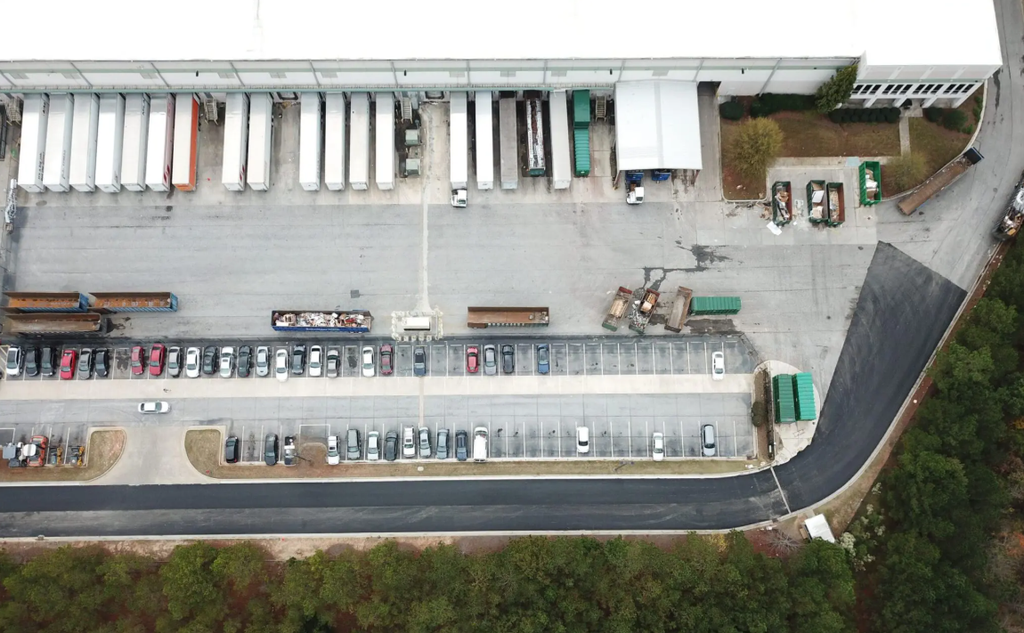
A 2022 distribution center project documented the performance of synthetic fiber reinforcement under challenging installation conditions. The project used FORTA-FI synthetic fibers to reinforce the main drive from the entrance to the receiving area. “The entirety of this project was done at night with low 40 temperatures. There were no issues with mixing or placing of the asphalt,” according to project documentation. This case demonstrates how eliminating welded wire reinforcement removes installation problems, including mesh displacement during concrete placement, and reduces labor requirements.
What Fiber Dosage Is Required for Warehouse Slab Design?
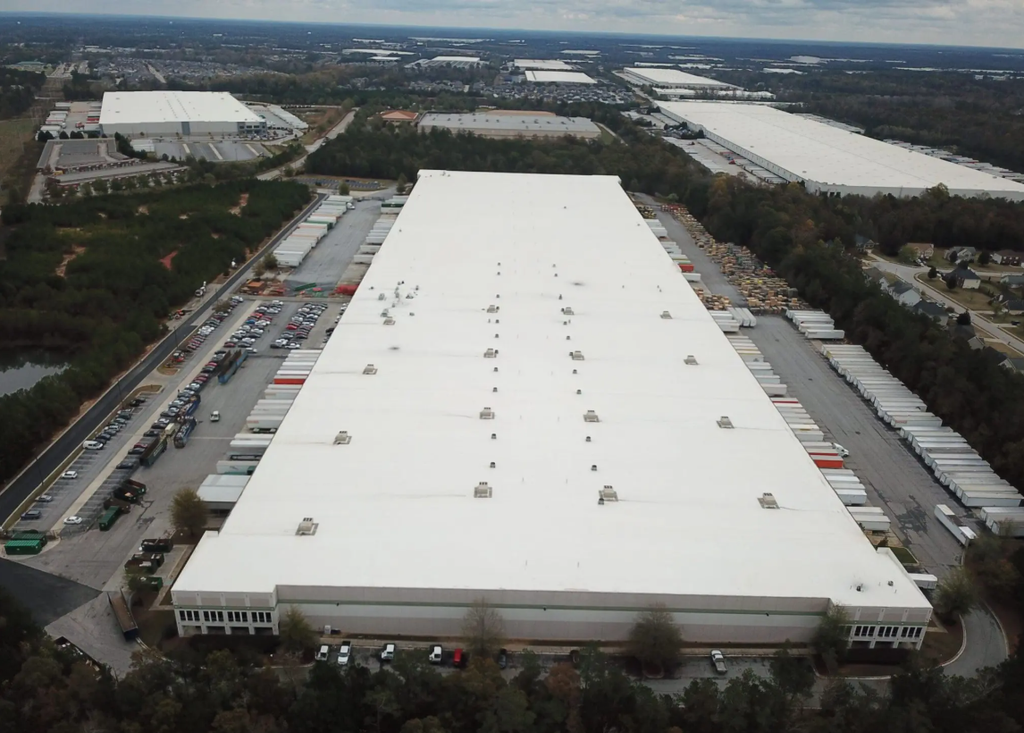
Fiber dosage depends heavily on traffic intensity, racking load concentrations, slab thickness and concrete design strength. Light-duty distribution centers with minimal forklift traffic may require less synthetic fiber per cubic yard, while heavy-traffic facilities with high racking loads typically need more pounds to provide adequate post-crack strength and crack control.
Fire rating represents an important characteristic to consider for fiber reinforcement, particularly in elevated slab applications. According to FORTA technical specifications, “FORTA’s monofilament fibers and fibrillated fibers are approved at a dosage rate of 1.5 pounds per cubic yard for use in D700 and D800 series decks as an alternative or in addition to welded wire fabric.”
Proper dosage calculations require coordination between structural engineers, ready-mix suppliers and the fiber manufacturer. Underdosing results in inadequate crack control, while overdosing increases material costs without proportional performance gains.
How Does Fiber Reinforcement Affect Distribution Center Floor Cost?
Initial material costs represent only one component of total project economics. Lighter reinforcement materials and faster placement reduce labor expenses during construction. A synthetic fiber system eliminates the crew time required to unroll and position welded wire mesh, significantly reducing installation hours on large warehouse pours.
“Rebar has been a dependable solution in construction for many years, which means it’s easy to buy for a reasonable price,” FORTA states. Long-term durability translates to lower maintenance costs and fewer disruptive repairs over decades of warehouse operation.
Can Professionals Get Engineering Support for a Fiber-Reinforced Warehouse Slab?
Manufacturers that provide in-house engineering support offer services beyond material supply, including preconstruction consultations, mix design verification, dosage calculations, and life cycle cost analysis.
According to FORTA’s engineering team, cost modeling helps owners evaluate total project economics rather than focusing solely on material pricing. The company’s engineering division handles design conversions from rebar to fiber reinforcement and provides optimization of existing specifications, addressing the technical complexity of specifying synthetic reinforcement systems.
The Future of Distribution Center Floor Reinforcement
GFRP mesh and synthetic macro fibers represent proven alternatives to traditional steel where corrosion resistance, installation efficiency and life cycle economics matter most. Material advancements continue improving fiber tensile strength, bond characteristics and dispersion uniformity within concrete matrices.
Selecting the appropriate reinforcement system requires understanding facility-specific load conditions, environmental exposures, and long-term operational plans. As the construction industry increasingly values sustainable solutions for optimized development, noncorrosive reinforcement systems deliver both immediate installation benefits and decades of reliable service.
*Please note that this list includes sponsored content. Some of the companies, products, or services featured have entered into commercial agreements for placement. Sponsored placements do not necessarily reflect an endorsement and should be considered alongside other options in the marketplace.