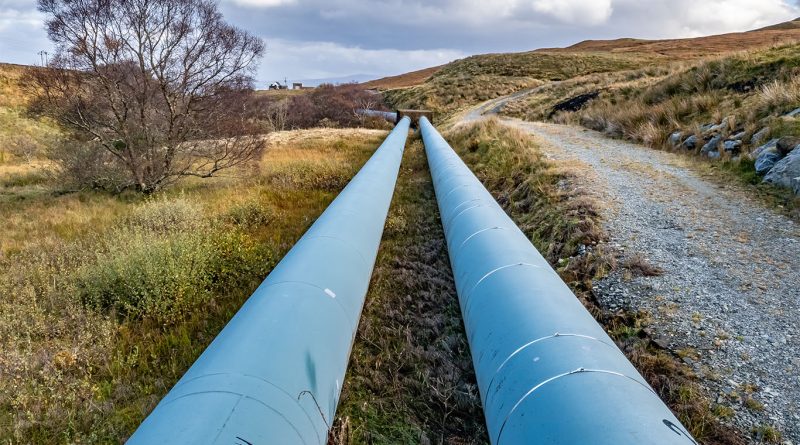
Gravity led design cuts carbon in £92.5m North East pipeline project
Subscribe to our free newsletter today to keep up to date with the latest construction and civil engineering news.
Britain’s water sector is entering a period of accelerated renewal, driven by ageing infrastructure, rising environmental standards and the need to secure long term supply. Across the country, utilities are investing heavily in new assets designed not only to replace outdated systems but to improve resilience and reduce operational carbon. The completion of the first phase of a major pipeline project in the North East of England highlights how these priorities are being translated into practice.
Northumbrian Water has completed Phase 1 of its Project Pipeline scheme in County Durham and the Tees Valley, a £92.5m investment aimed at strengthening water supply across the region. The milestone marks the delivery of more than 30 km of new pipeline connecting Lartington Water Treatment Works with storage reservoirs at Whorley near Gainford and Shildon. Once complete, the wider programme will extend to 57 km, linking water sources in Upper Teesdale with communities across southern County Durham and into the Tees Valley.
The scheme forms part of a broader shift in how water infrastructure is planned and delivered in the UK. Much of the existing network dates back more than 100 years, with systems originally designed for different patterns of demand and less stringent environmental expectations. As these assets deteriorate, utilities face increasing pressure to modernise networks while keeping costs manageable for customers.
Engineering delivery in a complex environment
Delivered in partnership with Farrans Construction, the first phase of the project has involved a range of engineering techniques to navigate both physical and logistical challenges. Among the most notable elements were 15 road crossings, including a tunnel beneath the A68, one of the region’s key arterial routes. By using trenchless construction methods in these areas, the project team was able to avoid major disruption to traffic.
A further technical challenge was the crossing beneath the River Tees. Engineers installed dual pipes through a tunnel driven between shafts constructed on either side of the river. This approach ensured that the watercourse and its surrounding environment remained undisturbed, reflecting the increasing importance of environmental protection in infrastructure delivery.
The pipeline has been a visible feature across parts of Teesdale during construction. However, as reinstatement work progresses, much of that presence is beginning to disappear, leaving behind infrastructure that will operate largely out of sight.
Designing for efficiency and lower carbon
A defining feature of the scheme is its reliance on gravity to move water through the system. By carefully designing the route and elevation of the pipeline, engineers have reduced the need for energy intensive pumping. This approach delivers immediate operational benefits by lowering energy consumption and associated carbon emissions.
Reducing reliance on pumping also has financial implications. Energy costs represent a significant portion of water companies’ operating expenditure, particularly in a volatile pricing environment. By embedding efficiency into the design of the network, the project helps to limit long term costs and supports efforts to keep customer bills stable.
This focus on passive efficiency reflects a wider trend across the sector. Rather than relying solely on technological upgrades, utilities are increasingly revisiting fundamental design principles to achieve sustainable performance improvements.
Environmental and community considerations
Environmental sensitivity has been central to both the design and delivery of the pipeline. The use of tunnelling beneath the River Tees and major roads demonstrates a commitment to minimising disruption to ecosystems and local communities. Trenchless methods such as microtunnelling allow infrastructure to be installed with limited surface impact, an approach that is becoming standard for complex projects.
Routing decisions have also played a role in reducing disruption. By avoiding densely populated areas, including towns such as Barnard Castle, the scheme has limited the need for intrusive construction activity. This not only reduces short term inconvenience but also lowers the risk of future operational issues affecting large numbers of customers.
Strengthening long term resilience
The long term value of the project lies in its contribution to network resilience. By replacing ageing pipes and creating new supply routes, the pipeline reduces the likelihood of bursts and service interruptions. It also enables the gradual removal of older mains that currently run through towns, further lowering risk.
As the full 57 km network is completed, it will provide greater flexibility in how water is distributed across the region. This is particularly important as demand patterns change and climate pressures increase. The ability to move water efficiently between different areas will be a key factor in maintaining reliable supply.
The North East pipeline scheme offers a clear example of how targeted investment can deliver multiple benefits. By combining modern engineering techniques with a focus on efficiency and environmental protection, it reflects a broader transformation in the UK water sector. What was once a largely hidden utility network is becoming a strategic asset, designed to meet the challenges of the coming decades.
Sources