Had Fab builds capacity, capability, and confidence as major infrastructure frameworks drive its next phase of growth
Since 1993, Had Fab has carefully cultivated its stellar reputation across structural engineering, metal fabrication, and project delivery. Armed with a multidisciplinary team bringing design, engineering, project management, material supply, fabrication, surface treatment, and installation together under one roof, the company gives its customers a single, coordinated route from concept to completion. From power transmission and distribution to energy, rail, civils, infrastructure, and more, Had Fab proudly works alongside DNOs, operators, consultants, OEMs, principal contractors, and supply chain partners to deliver fabricated steel solutions built around real project requirements.
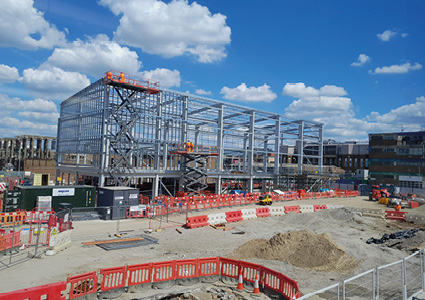
Following multimillion-pound investments in facilities and equipment, Had Fab is well-equipped with the resources to support major projects across the UK and overseas. We’re keen to reunite with the company’s Managing Director, Greg Scott, to uncover the latest developments since we last spoke in 2025.
“Generally speaking, it’s been quite a whirlwind of a year,” he reveals. “We’ve been bringing lots of new people into the business to improve our capacity, and our forecasting of operational output has increased significantly. All of this has been happening during a period of rapid transition. At the same time, we’re broadening our service offering and becoming more involved with customers at the early definition stage of projects. A lot of the designs in this market, particularly for transmission towers, are very old and are still based on metric drawings, so we’ve been working with National Grid and some of the other distribution network operators to produce digital models, making the designs easier to manufacture and easier to install.”
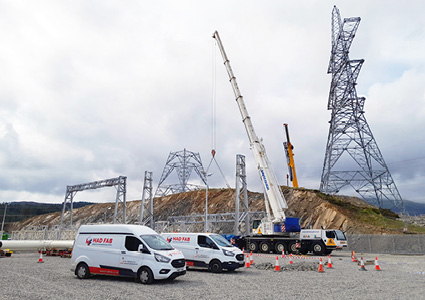
In our last conversation, Greg shared valuable insight into one of Had Fab’s most notable recent contracts. Awarded to the company in 2025 from the Wood Group and J Murphy & Sons on behalf of SSEN, the contract will oversee the construction of 500 transmission towers, set to be delivered over a three-year period. With the towers valued at £100 million, the transmission line will help to transport offshore wind power to distribution centres, engineered to support heavier conductors and greater efficiency.
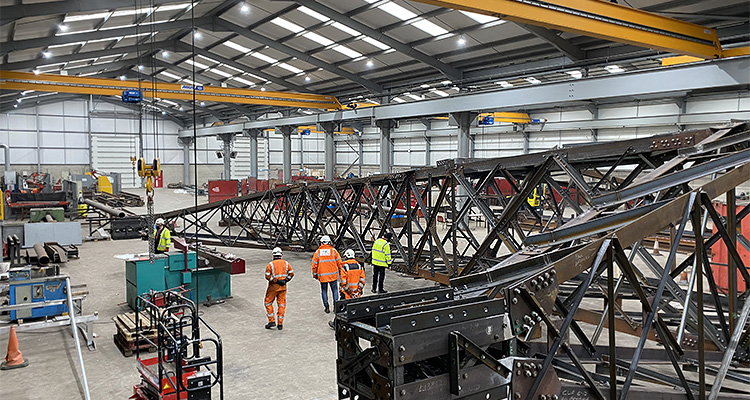
As Greg emphasised previously, delivering a project of this scale has required a significant increase in both production capacity and operational planning for Had Fab. As such, the company has had to adapt its manufacturing processes to handle higher volumes while maintaining the flexibility needed for its business-as-usual work, alongside the additional logistical demands of moving, galvanising, and organising the components required to complete each tower.
“We’ve increased our production from around 600 tonnes per month to more than 1400 tonnes per month. These framework agreements, such as the one with SSEN, are high-volume, long-term projects that require much more setup time, so we’ve segmented our production capacity. We can dedicate certain areas to the framework agreements, where we produce high volumes of similar parts in continuous runs without having to change the setup, while reserving capacity for our business-as-usual projects, which require a different approach,” Greg explains.
“We don’t carry out galvanising on site, so components coming off the machines and completing their secondary operations have to be transported to a galvaniser, currently predominantly in Glasgow. When they return, they need to come back in the same organised bundles so that we can assemble them into complete kits. The logistics challenge is therefore quite significant. It’s not simply a matter of having lots of machines producing large quantities of metal components; it’s about how we organise and manage everything downstream. Our yard and logistics operation is becoming increasingly complex, and it’s an area of significant focus for us. We need to make sure we can manage the growing demand and complexity while continuing to deliver the required volume of towers on time and in full.”
Enhancing operations
This substantial increase in capacity and capability, of course, has been underpinned by a significant investment programme. For instance, the company has just invested heavily in five new Ficep machines for its angle line processes, installing its first in August 2026, and is already seeing great productivity gains. In addition to this, Had Fab has also invested in a brand-new ERP system in partnership with STRUMIS, which is set to further streamline and simplify the company’s operational processes as it continues to rapidly scale.
In terms of geographical expansion, Had Fab has also recently opened a new commercial office in Glasgow to support its continued growth across the country. This new office represents one of many infrastructural investments for the company as it develops and strengthens its operational footprint to accommodate future opportunities. “We’re currently building a new factory predominantly for aluminium. That will be on our current footprint but will be dedicated to our aluminium product line. We’ve also taken some land down at Rosyth which is primarily for logistical services. We have a team of around 30 people there who handle the bundling and onward transportation,” Greg affirms. “Additionally, we’re continuing to develop our own footprint here in Tranent. We have new buildings going up in our yard across the road for processing and bundling business-as-usual projects. Further down the line, we’re currently in negotiations to take another ten to 15 acres adjacent to our existing site, on greenfield agricultural land, to develop purpose-designed, newly built factory premises. Overall, we’re planning for the longer term because we can see the opportunities ahead through some of these major frameworks. It’s an exciting time for us.”
Strategic scale
With new facilities, additional people and new ways of working being introduced across the organisation, Had Fab’s focus is now on ensuring the structure and processes behind that growth are firmly in place.
“As we’ve gone through this period of growth, we’ve certainly faced some challenges. We need to bed in our new organisational structure, new people, and new processes, and that requires a lot of leadership attention. We’re not quite there yet; there are still a few things that need to be ironed out to get us to the next level of performance. My main focus as a leader is therefore to get all those changes fully embedded and performing effectively, and to move the business to the next level with greater predictability. Essentially, it’s about having everyone on the same page and working towards the same objectives,” Greg reiterates, concluding our conversation.
For Had Fab, the next chapter is about turning rapid expansion into lasting performance. With production capacity increasing, new facilities coming online, and major frameworks creating a strong pipeline of work, the company now faces the task of settling that growth into place. Greg’s ambition is one of discipline as much as scale – building a business that runs as reliably as it grows. With that work underway, Had Fab is positioning itself for what’s next in an evolving infrastructure landscape.