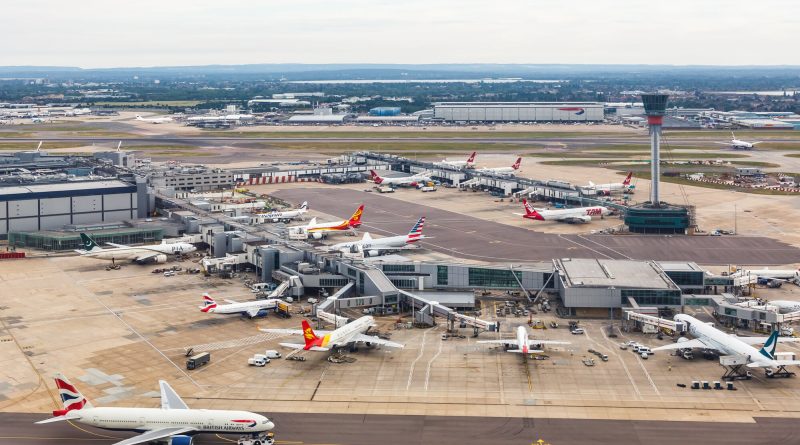
Heathrow’s £49bn expansion faces longer delivery timeline
Subscribe to our free newsletter today to keep up to date with the latest construction and civil engineering news.
Heathrow Airport’s proposed third runway may not open until 2039, four years later than the UK government’s previous ambition of 2035, as the airport prepares for one of the country’s largest infrastructure programmes.
Heathrow still aims to secure planning permission by 2029. However, the airport has said construction could then take up to 10 years. It said delivering the runway by 2035 would have required major changes to regulation and policy.
The change puts renewed attention on the delivery timetable for a project that has been debated for decades. The wider Heathrow investment programme is expected to cost about £49 billion, covering the runway, terminal capacity and improvements to existing airport infrastructure.
For the construction sector, the later opening date does more than move a milestone. It highlights the scale of the planning, engineering and coordination needed before additional flights can use the new runway.
A 2029 planning decision is now central to the timetable
The revised schedule makes Heathrow’s target of obtaining planning permission by 2029 increasingly important.
The airport remains in the pre-application stage. Its plans must go through the Development Consent Order process before major construction can begin. Heathrow is also preparing an eight-week public consultation from 27 October to 22 December 2026.
The next few years will therefore be shaped as much by planning and regulation as by engineering.
The government has backed expansion at Heathrow as part of its wider economic and aviation policy. However, political support does not amount to planning consent. The project must still meet legal, environmental and infrastructure requirements before construction can proceed.
Any delay to the consent process would place further pressure on the 2039 timetable. Securing approval in 2029 would also mark only the start of a complex construction programme.
That distinction matters for contractors and suppliers considering the project. Large infrastructure schemes require companies to plan labour, equipment, materials and investment years in advance. A clearer consent timetable would give the market more certainty over when that demand could emerge.
The latest date therefore gives a clearer view of the sequence involved. Planning remains the first major hurdle, while physical delivery would follow over a much longer period.
Building the runway will involve far more than laying new tarmac
The third runway is just one part of Heathrow’s wider expansion plans. The proposals include a north-west runway of up to 3,500 metres, supported by new taxiways, terminal facilities and surface access infrastructure. Heathrow says the expansion could eventually accommodate up to 276,000 additional flights a year.
One of the biggest challenges, however, would be the work required around the M25. The motorway runs through the area needed for the expanded airport. Current plans include moving and lowering part of the M25 into a tunnel beneath the proposed runway. This would require major road, tunnelling and civil engineering work while maintaining access around one of the UK’s busiest transport corridors.
Terminal capacity would also need to increase. The programme includes further development around Terminal 5, alongside upgrades elsewhere across the airport.
Taken together, these projects create a construction challenge that extends far beyond aviation infrastructure. The programme would involve road engineering, tunnelling, utilities, terminal construction, baggage systems, airfield works and surface transport.
That range of work could create a large pipeline for contractors and manufacturers if the project secures consent. It also creates dependencies between individual parts of the programme.
A runway cannot operate at its intended capacity without enough terminal space, aircraft stands, taxiways and ground transport. Delivery will therefore depend on the sequence and coordination of several major projects rather than the completion of one section of airfield.
This helps explain why Heathrow is allowing up to a decade between planning consent and opening.
The capacity question remains while Heathrow waits
The longer timetable does not remove the issue Heathrow says expansion is intended to address.
Heathrow operates with two runways and has argued for years that limited runway capacity restricts future growth. Its expansion plans are intended to increase the number of flights the airport can handle while adding passenger and freight capacity.
The airport also plays a major role in UK trade. Heathrow says more than £200 billion of trade passes through the airport each year, making freight capacity part of the economic case for expansion.
For businesses that depend on air cargo, particularly those moving high-value or time-sensitive goods, airport capacity affects more than passenger travel. It can influence access to international markets and the range of routes available to exporters.
A later runway opening means any additional capacity linked directly to the project would also arrive later.
That does not establish that expansion is the only way to meet future aviation demand. The project continues to face scrutiny over environmental impact, noise, surface transport and cost. Those issues will remain part of the planning process.
Heathrow’s timetable is, however, moving into a more practical phase.
The immediate milestone is the 2026 consultation, followed by the work needed to seek planning approval by 2029. Only after that point could the full construction programme move towards delivery.
For the infrastructure industry, 2039 may be less important as a fixed opening date than as a sign of the project’s scale. The next major test is whether Heathrow can maintain the planning timetable on which that date depends.
Source:
MarketScreener