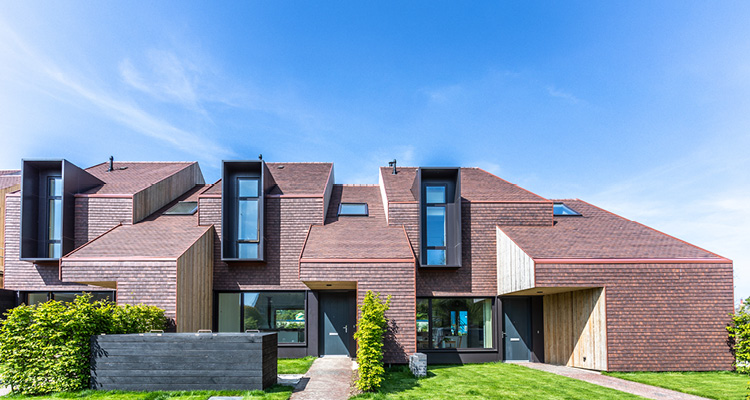
How Marshalls is combining heritage, sustainability, and innovation to accelerate Britain’s evolving built environment
With a rich legacy spanning 130 years, few companies have shaped the UK’s built environment quite like Marshalls. From humble beginnings as a local stone business, the company has evolved into an industry-leading powerhouse covering a vast range of landscaping, building, roofing, and renewable energy solutions.
Today, Marshalls operates across three core divisions – landscaping products, building products, and roofing products – bringing together seven specialist businesses to deliver solutions for homes, public spaces, infrastructure, and commercial developments. From paving streets and managing water systems to roofing homes and advancing solar technology, Marshalls combines practical expertise with innovation to help customers build smarter and more sustainably. Across every business (Marshalls Bricks & Masonry, Marshalls Water Management, Marshalls Mortars & Screeds, Marshalls Aggregates & Block, Marley Roofing, Viridian Solar, and Marshalls Landscaping), the company is focused on delivering trusted products, expert support and future-ready solutions that create lasting value.
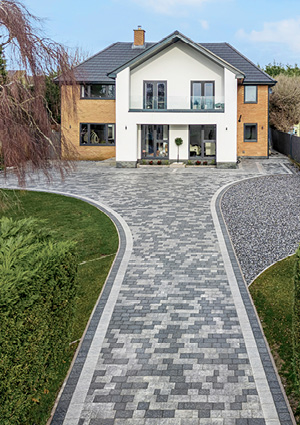
Now, whether supporting the construction of homes, hospitals, schools, streets, or critical infrastructure, Marshalls continues to be driven by its vision to be the first choice for building materials and infrastructure solutions. By combining long-standing heritage with a strong commitment to sustainability and innovation, the business is helping customers create resilient, lower-carbon environments built for the future, supporting projects that touch everyday lives across the country. Construction & Civil Engineering sits down with Nick Platt, Marshalls’ Group Managing Director, and Simon Magleave, Group Operations Director, to discuss the company’s continued growth and innovation. Nick begins our conversation by discussing how Marshalls’ ongoing ‘Transform & Grow’ strategy is defining its current operations.
“Transform & Grow is about making sure the business is in the strongest possible position for the future,” he explains. “Part of that is about improving efficiency and simplifying how we operate, but it’s also about investing in the right growth opportunities and making the organisation more agile and resilient. We’re looking carefully at manufacturing efficiency, commercial execution, customer experience, and how we allocate investment across the group. Ultimately, the aim is to build a stronger, more focused business that’s well positioned to grow sustainably over the long term while continuing to deliver value for customers.”
Equipped with this strategic long-term focus, Marshalls is well-positioned to embark on a new period of transformation. In fact, the group’s recent performance reflects where that momentum is already starting to translate into tangible results, particularly through the strong growth of its building products and roofing divisions. Specifically, Simon credits this growth to a combination of both favourable market dynamics and the benefits of Marshalls’ targeted investments and portfolio expansion.
“We’re operating in markets shaped by strong long-term trends – such as climate resilience, energy efficiency, and infrastructure investment,” he elaborates. “Those trends are creating demand for water management and integrated solar roofing products. Secondly, the acquisition of Marley in 2022 gave us a much broader platform within roofing and renewable technologies. They operate in more resilient markets, which has helped to diversify the group.
“Finally, I think customers increasingly value trusted, established partners who can provide quality, reliability, and technical support. Marshalls has built a long-standing reputation for this, and it continues to resonate in the market.”
Group sustainability
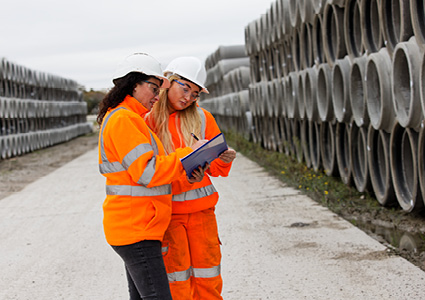
Alongside its operational growth, Marshalls is also continuing to strengthen its sustainability agenda across the group. The business has placed increasing emphasis on reducing carbon emissions, improving resource efficiency, and developing products that support more sustainable construction practices. From investing in modern manufacturing facilities to expanding solutions that help manage water, improve energy efficiency, and support low-carbon infrastructure, sustainability is becoming embedded across every stage of the business. The group also recognises the importance of collaboration throughout the supply chain, working closely with customers, contractors, and local authorities to help deliver projects that meet both environmental targets and long-term community needs.
Against that backdrop, the group continues to focus on strengthening its operations, enhancing customer service, and positioning itself for further growth. Landscaping, for instance, remains a hugely important part of the group’s operations and is an area in which it continues to invest with confidence.
“Over the last few years, we’ve invested across manufacturing, logistics, product innovation and customer service. A big focus for us has been making the business easier to work with, improving availability, service levels, and responsiveness, while also continuing to invest in the quality and breadth of our product ranges,” Simon details. “We’re also investing strategically in areas where we see long-term growth opportunities, particularly in urban regeneration, active travel, public realm, and outdoor living. Even in a more challenging market, we believe there’s still a real opportunity to grow share by staying close to customers and continuing to innovate.”
“We’ve recently brought several new products and ranges to market across the landscaping division, with a strong focus on design, durability, and sustainability,” Nick continues. “Whether that’s products that are easier to install, solutions that support active travel and infrastructure projects, or ranges that offer more contemporary aesthetics for commercial and residential spaces, we’re constantly evolving the portfolio.”
Such investments are not limited to Marshalls’ Landscaping but rather are being extended across the entire group. Looking ahead, the company remains focused on maintaining progress despite ongoing market uncertainty. With a clear long-term strategy in place and continued investment across the business, the priority now is on delivering consistent operational performance and supporting customers effectively in the months ahead.
“Our focus for the rest of 2026 is on disciplined execution and continuing to build momentum across the business,” Nick reveals. “We want to keep improving operational performance, strengthening customer relationships and investing in innovation and sustainability across our product ranges. The market remains mixed in certain areas, but we’re focused on controlling what we can: service, quality, availability, and supporting our customers well. We believe that staying close to customers and continuing to invest for the long term puts us in a strong position moving forward.”
As Marshalls enters its next chapter, the company continues to prove that heritage and innovation are not opposing forces, but powerful partners for long-term success. With a diversified portfolio, a clear growth strategy, and sustained investment across its operations, the group is continuing to evolve alongside the changing demands of the built environment. Whether delivering lower-carbon infrastructure, advancing renewable roofing technologies, or reshaping public spaces through innovative solutions, Marshalls remains firmly focused on building for the future.
“In five years’ time, we want Marshalls to be recognised not just as a leading manufacturer, but as one of the UK’s most trusted partners within the built environment,” Simon affirms, concluding our conversation.
“Marshalls is a business with a strong heritage, but is also very focused on the future. The construction industry is changing quickly, whether that’s through sustainability, technology, infrastructure investment or changing customer expectations, and we see that as a real opportunity. We’ve got strong brands, great people and a clear strategy for where we want to take the business next. The focus now is to continue evolving, continue investing and make sure we’re well-positioned for long-term, sustainable growth.”