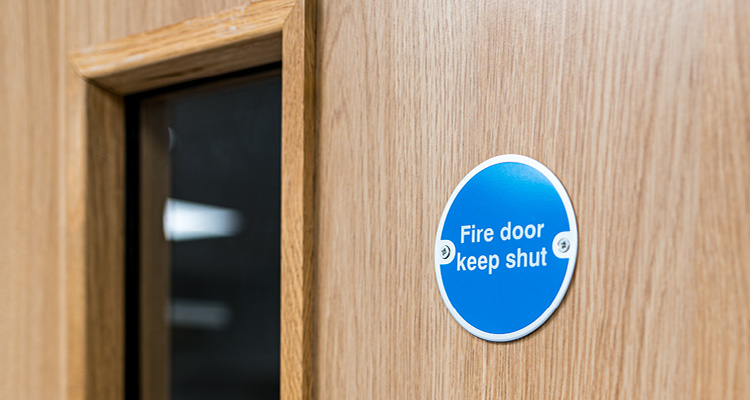
Jonny Millard, MD and founder of UK Fire Door Training, discusses why effective fire door safety depends on turning regulation into everyday practice
After years of building safety reform, there are two questions I think we should be able to answer with confidence by now: how do we know the person carrying out safety-critical work is competent to do it, and how do we help competent people prove it?
For fire doors, those questions are still harder to answer than they should be, and I think the industry needs to be honest about that.
I spend much of my working week training the people who install, inspect, and maintain fire doors, so I hear first-hand about the challenges they face.

The Building Safety Act, the Fire Safety (England) Regulations and the competence frameworks that have followed have brought much greater attention to competence.
I can see the impact on the front line. People have a better understanding of their responsibilities and they’re asking more questions, which is progress. But there’s still far too much uncertainty around how somebody demonstrates their competence and what good evidence looks like.
Our recent industry research found that 78 per cent of respondents knew what the Building Safety Act was and 71 per cent felt confident in their understanding of SKEB (skills, knowledge, experience and behaviours).
However, 59 per cent said they didn’t know how to evidence their competence and only 32 per cent felt clear about what acceptable evidence should look like.
Those figures should make us uncomfortable. We’ve spent years developing legislation, frameworks, and definitions around competence, but many of the people expected to meet those requirements are still unsure how they’re supposed to demonstrate it.
For fire doors, that uncertainty has real consequences. A fire door is a specialist piece of life-safety equipment whose performance depends on the doorset and its components working together correctly. Fitting the wrong seal or replacing an incompatible component might seem like a relatively small mistake on site, but it can affect how that door performs when somebody’s safety depends on it.
Anyone installing or maintaining fire doors therefore needs the appropriate SKEB for the work they’re carrying out. There is currently no single mandatory qualification somebody must hold simply to undertake that work, which makes the way we assess and evidence competence even more important.
Training and qualifications are clearly part of that assessment. I run a training business, so I would be in a strange position if I suggested otherwise. But I also think our industry can put too much faith in certificates.
I’ve worked with people who have plenty of qualifications but still need development in certain practical areas, and I’ve met highly experienced people whose ability isn’t easily captured by the certificates they hold.
Another issue is that evidence is often scattered. A training certificate might be held in one system, records of experience somewhere else, while some of the best insight into an installer’s practical capability may sit with the supervisor who has worked alongside them for years.
For those responsible for allocating safety-critical work, that creates a practical problem. They need a reliable way to understand what somebody is competent to do, whether the evidence supporting that judgement is current and whether their capability is appropriate for the work being assigned.
Individuals need that clarity too. If somebody has spent years developing their skills, they should be able to demonstrate that experience, understand how it relates to their role and see where further development is needed.
I think recognising the limits of your own competence is one of the most important behaviours in safety-critical work. I would much rather somebody stopped and asked for guidance than carried on because they felt they were expected to know the answer. We need a culture where that judgement is respected.
Competence also changes throughout a person’s career as people gain experience, move roles and take on different responsibilities, while products, standards and working practices evolve. A certificate gained several years ago remains useful evidence, but it might bear little resemblance to the person’s capability today.
Our research shows how heavily the industry still relies on certificates. Among respondents who believed they could evidence their SKEB, 85 per cent cited training certificates. That concerns me because evidence of training can too easily become shorthand for evidence of competence.
We need a fuller and more current picture, bringing together training, experience, practical capability, and behaviours in a form that individuals and employers can easily maintain and use. I have very little appetite for another administrative exercise that looks impressive on paper but makes no difference to decisions on site.
What I would like to see is a clearer way for somebody to understand how they measure up against the recognised competence framework for their role: what is expected of them, what evidence they already have and where there are gaps to address.
That record should develop with the individual as they gain experience, change employers or move into different roles, rather than having to be pieced together or rebuilt each time.
Employers need that visibility across their workforce too. Those responsible for allocating safety-critical work should be able to see where people sit against the relevant standards, whether their evidence is current and where further development is needed, without pulling information from different systems, spreadsheets and folders.
There is a useful parallel with the golden thread. We have accepted that important building safety information needs to remain accurate, accessible and useful over time. I think the information we rely on to make decisions about people’s competence deserves the same attention.
From what I see on the fire door safety front line, people are ready for that. The people I meet understand the responsibility that comes with their work and want to do it properly. They need a clearer route through what can still be a complicated landscape of frameworks, evidence, training and ongoing development.
We’ve done a lot of work defining what competence should look like. The next step is giving individuals and employers a practical way of applying those definitions in the real world, where decisions have to be made about who is competent to carry out particular work and people need to demonstrate what they can safely and competently do.
For me, that’s how we start turning regulation into reality.
Jonny Millard
www.ukfiredoortraining.com
UK Fire Door training is the industry’s leading provider, created in 2021, with a vision to improve the standard of fire door training in the UK. The team consists of qualified teachers, carpenters, and fire door inspectors who have been working in the education and fire door industry for a combined total of 50 years. The team aims to improve fire door awareness and competency through industry leading training courses.