Learn more about the partnerships and projects fuelling Echelon Data Centres’ expansion across the world
Established in 2017 to meet the rapidly expanding global demand for data processing and storage solutions, Echelon Data Centres (Echelon) develops, owns and operates a growing network of large-scale data centre campuses across Europe. Through its specialist services, the company delivers resilient, scalable infrastructure for cloud service providers, hyperscalers and large enterprises. Over time, the company has built a fast-growing portfolio of data centre, power generation and storage facilities that provide reliable capacity across Ireland, the UK and Europe. What sets Echelon apart is a power-first philosophy that treats energy infrastructure not as an afterthought but as the foundation on which everything else is built. Additionally, all of its facilities are developed and operated with sustainability and ethical consideration front of mind, in line with its commitment to the communities in which it operates. Simon McCormick, Chief Commercial Officer, tells us more about how that approach is shaping the company’s expansion and why the most important resource in the data centre industry is neither land nor technology, but power.
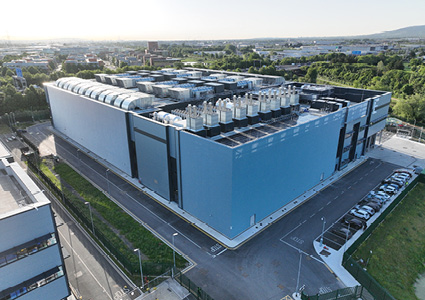
“At Echelon, we develop digital infrastructure assets, focusing primarily on data centres. We design, build, and operate them, and then lease them to some of the largest and most recognisable companies in the world. That is the core of what we do. Alongside the data centres themselves, we also build power plants and substations, constructing the energy infrastructure needed to keep these facilities running. We were originally founded in 2017 as a single-market specialist in Ireland, but we have since grown into three additional locations: the UK, Italy and Spain,” he begins.
Continuous improvement
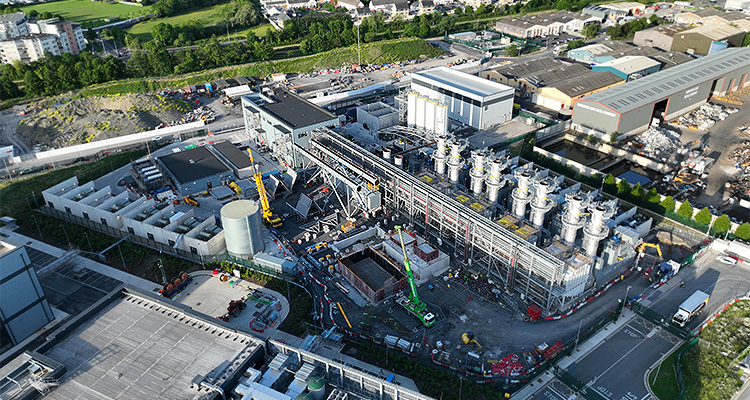
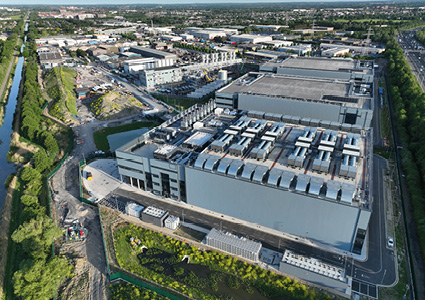
Underpinning everything Echelon does is a power-first approach. As cloud migration accelerates and AI becomes an ever-greater part of our daily life, the demand for data centre capacity continues to grow. While that growth requires land to site the infrastructure and skilled people to design, build and operate it, the single biggest constraint is almost always power. That is where Echelon can step in and offer something truly distinctive. “Taking our first data centre campus in west Dublin as an example, we have not only built 600,000 square feet of data centre space, but we also constructed a 200-megawatt power plant to power the facilities, because of constraints on the local electricity grid. Not every campus we develop requires that level of infrastructure, but it is a good illustration of how we approach difficult problems and do difficult things whenever our customers need us to,” Simon explains.
However, doing things at scale does not mean doing them without care. Central to Echelon’s mode of operations is sustainability. “When it comes to sustainability, we do not believe there is such a thing as too small an issue to address,” Simon says. “Whether it is material reuse on site, social clauses written into our construction contracts or support for large renewable energy projects, we embrace a multi-faceted approach. One of the best examples from a construction standpoint is our use of remote monitoring systems. That includes static cameras, drones and a proprietary audio-sensing technology that builds a large dataset over time, enabling continuous improvement across projects and empowering us to build more efficiently. By monitoring remotely, we reduce waste, cut emissions and save a significant number of road journeys that would otherwise be necessary. These gains may sound small, but replicated across the numerous projects we are working on at the moment, the cumulative impact is considerable.”
Supporting sustainable projects
As it focuses primarily on the power side of data centres, Echelon is equally passionate about integrating renewable energy into its operations, further reducing its environmental impact. A fitting example is a significant project currently underway in County Wicklow, around an hour south of Dublin, where Echelon is developing the onshore grid infrastructure that will support SSE Renewables’ 850-megawatt offshore wind farm off the east coast of Ireland. “We feel that supporting SSE Renewables and other companies that build large renewable energy projects is our way of contributing. That wind farm will play an important role in Ireland achieving its renewable energy targets, and we are proud to help make it happen,” Simon adds.
Reinvigorating local communities
Echelon has just broken ground on the County Wicklow project and is in the middle of construction. “This project is particularly important to me, as it is the first scheme I worked on when I became involved with Echelon, so it has been quite a journey. But the lasting impact it will have, particularly on jobs in the local community, on the local economy and on the grid infrastructure in the area, makes it all worthwhile.”
The site itself adds another layer of meaning to the project. It is a former fertiliser factory that once provided numerous local employment opportunities, and Echelon is not only rehabilitating the environmental condition of the site but transforming it into a new source of jobs and economic activity for the area.
“Through a mixture of construction and operations contracts as well as their ripple effects, we are going to invest a lot of money into the local economy,” Simon clarifies. For Simon, whose background as a chartered civil engineer and chartered surveyor and member of both the Institution of Civil Engineers and the Royal Institution of Chartered Surveyors gives him a particular appreciation for the regenerative potential of infrastructure projects, that aspect of the work is particularly rewarding.
Echelon’s current pipeline stands at nearly two gigawatts. If the company were to fully build that out, it would represent an investment of tens of billions. To begin making meaningful progress against that pipeline, the company recently secured a €1.7 billion loan from Morgan Stanley, which will go towards funding expansion across Ireland, the UK, Italy and Spain. “That capital is just the beginning, but it allows us to take our first substantial steps across a number of locations simultaneously. The funds will be invested into physical infrastructure and systems to support our broader build programme. One thing with data centres that always catches people not from the industry off guard is the scale of capital required, as these truly are mega projects,” Simon highlights.
Championing modular construction
To deliver such large projects efficiently at that scale, Echelon is placing a strategic bet on off-site manufacturing and assembly. The company sees significant potential in designing data centres that can be largely constructed off-site and then assembled on-site. While the principle of modularising mechanical, electrical and even IT systems is not new to the industry, Echelon has found a way of maximising the benefits of that approach. Even though certain elements like structural steel, cladding and facades will always need to be built on site, the company’s view is that almost everything else could be manufactured off-site, shipped in and assembled on a plug-and-play basis. It is an approach that has the potential to dramatically reduce construction timelines and improve consistency across the programme.
Embracing modular construction is set to facilitate Echelon’s project delivery, especially as it looks to expand geographically. One of the most exciting developments supporting the company’s further expansion plans into Spain is a newly formed partnership with Iberdrola, a public energy firm.
While its operations are based in Spain, the Spanish energy giant possesses a global coverage, with operations spanning the Americas and the UK. Iberdrola builds generation assets such as wind farms, solar farms and renewable energy plants, but also forms part of the grid system in Spain.
Simply put, the firm constructs the overhead lines and underground cables that carry power across the Spanish countryside. For a power-focused company like Echelon, Iberdrola is an ideal partner with whom to explore a market that it has had its eye on for some time.
“It is truly exciting to be in partnership with a large, successful company like Iberdrola to enter the Spanish market. Spain has all the fundamentals we look for, renewable energy in particular is a key part of that. To enter that market alongside a partner of Iberdrola’s scale and credibility is genuinely exciting, as we will benefit from the support of their team. I think it is worth stressing that this is a direct expression of our power-first strategy. In this case, we have quite literally partnered with an electricity organisation to develop these projects together,” Simon ends.
Echelon is operating in one of the most capital-intensive, technically demanding and fast-moving sectors in the world, and doing so with a clarity of purpose that is not always easy to maintain at this scale. Its power-first strategy, involvement in the County Wicklow regeneration project, partnership with Iberdrola and the €1.7 billion Morgan Stanley loan all show one of the company’s core convictions: that the infrastructure supporting the digital economy needs to be built properly, powered responsibly and developed with the communities it touches in mind.
With a significant and sizeable pipeline and expansion moving across four markets simultaneously, Echelon is poised to get busier and keep growing as time goes on. However, no matter how many projects it is working on simultaneously, the company seems determined to grow without cutting corners, which is rarer than it should be in this ever-evolving industry.