Lovell’s £1bn Druids Heath deal pushes Birmingham regeneration ahead
Subscribe to our free newsletter today to keep up to date with the latest construction and civil engineering news.
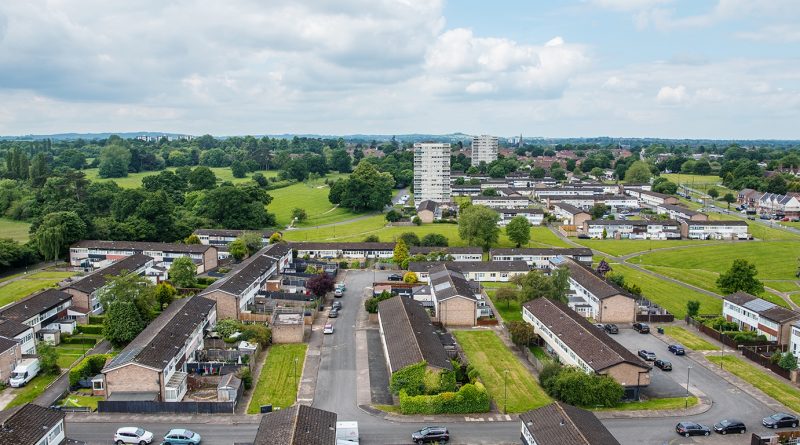
Birmingham City Council’s partnership agreement with Lovell marks a major milestone in the long-running regeneration of Druids Heath, one of the city’s largest postwar housing estates. The £1bn redevelopment project, which aims to deliver around 3,500 homes over multiple phases, has moved from planning and consultation toward long-term delivery.
For Birmingham, the scheme reflects far more than a housing redevelopment. It represents a high-stakes attempt to address housing shortages, aging social housing stock and economic inequality through large-scale urban regeneration. For the wider construction and housing sector, the project highlights how difficult estate renewal has become amid rising build costs, planning complexity and political scrutiny.
The Strategic Partnership Agreement signed between Lovell and Birmingham City Council formalizes the developer’s role in delivering the regeneration over the coming years. The scale alone places Druids Heath among the UK’s largest active estate renewal projects.
How Druids Heath became one of Birmingham’s most ambitious regeneration schemes
Built primarily during the 1960s, Druids Heath was designed as a large municipal housing estate on the southern edge of Birmingham. Over time, many properties suffered from poor energy performance, structural deterioration and mounting maintenance pressures. Large sections of the estate were also affected by social deprivation and weak transport connectivity.
The regeneration plans seek to replace around 1,800 existing homes while significantly increasing overall housing density. Current proposals include approximately 3,500 homes across a 187-acre site, with more than half expected to fall within affordable housing tenures.
That affordable housing commitment has become central to the project’s political positioning. Birmingham City Council has faced sustained pressure to increase housing delivery while protecting social housing provision. Initial plans include around 400 homes for social rent, alongside shared ownership and other affordable tenures.
The scheme also reflects the growing preference for mixed-tenure neighborhoods rather than mono-tenure social housing estates. Across the UK, councils and developers increasingly frame regeneration around creating economically mixed communities intended to improve long-term investment and local services.
For Lovell, the project strengthens its position within the UK regeneration market, where public-private partnerships have become increasingly important as councils struggle with budget constraints and rising borrowing costs.
Why estate regeneration now depends on public-private delivery models
Projects on the scale of Druids Heath have become exceptionally difficult for local authorities to deliver independently. Construction inflation, labor shortages, remediation costs and tighter regulatory requirements have significantly altered the economics of regeneration during the past five years.
Local authorities increasingly rely on development partnerships that distribute financial risk across both public and private sectors. The Druids Heath agreement follows a wider national trend where councils retain strategic oversight while developers manage delivery, procurement and phased construction.
That model carries advantages, particularly around access to private capital and development expertise. Large regeneration projects often require long-term delivery frameworks extending across decades, with multiple planning submissions, infrastructure packages and funding mechanisms.
Yet the model also creates tensions.
Viability negotiations have become one of the most contested areas of UK housing development. Affordable housing targets agreed during early planning phases frequently come under pressure as build costs rise or market conditions weaken. Across England, several major regeneration schemes have already faced revisions linked to inflation and slowing residential sales.
The timing of the Druids Heath agreement is particularly notable given the broader uncertainty facing UK housebuilding. Elevated borrowing costs and slower market absorption rates have forced developers to reassess pipeline risk across large residential projects.
Against that backdrop, long-term regeneration partnerships offer developers greater visibility and land certainty, while councils gain a delivery route for politically important housing targets.
The regeneration debate extends beyond construction and housing numbers
Despite broad political support for redevelopment, estate regeneration projects rarely progress without opposition or concern from existing residents.
Druids Heath has been no exception.
Resident groups and campaigners have raised concerns around displacement, rehousing guarantees and the long-term affordability of replacement homes. Similar debates have emerged across regeneration projects in London, Birmingham and Manchester, where critics argue some schemes gradually reduce genuinely affordable social housing despite headline housing growth.
The council has pointed to consultation activity involving more than 1,000 residents, with reported majority support for the plans. Still, consultation processes surrounding estate renewal often remain contentious, particularly when demolition forms part of the strategy.
The debate also reflects a wider shift in housing policy discussions across the UK. Questions surrounding retrofit versus demolition have intensified as sustainability targets become more demanding. Demolition-heavy regeneration schemes increasingly face scrutiny over embodied carbon, construction waste and long-term environmental impact.
Supporters of redevelopment argue some postwar estates are no longer economically viable to retrofit at scale, particularly where structural problems, insulation failures and outdated layouts limit modernization potential.
Critics argue refurbishment could preserve communities while reducing environmental costs.
Druids Heath sits directly within that national argument.
What Druids Heath signals for the future of UK regeneration
The significance of the Druids Heath partnership extends beyond Birmingham.
The project illustrates how UK regeneration is becoming increasingly dependent on long-term collaboration between local authorities, institutional partners and major residential developers. It also demonstrates how regeneration has evolved into a broader economic and political exercise rather than a straightforward construction program.
Housing delivery targets remain under pressure nationally. Councils face growing demand for affordable housing while operating under severe financial constraints. Developers continue to navigate uncertain market conditions and tighter regulatory oversight following building safety reforms.
Large regeneration schemes now require far greater political resilience than previous generations of estate renewal. Delivery timelines stretch across election cycles, economic downturns and changing housing priorities.
For Birmingham, Druids Heath represents a defining urban project with implications for housing supply, investment confidence and public trust in regeneration itself.
For the wider industry, it may become an early indicator of whether large-scale estate renewal can still function commercially, politically and socially in modern Britain.
Source
Photo credit