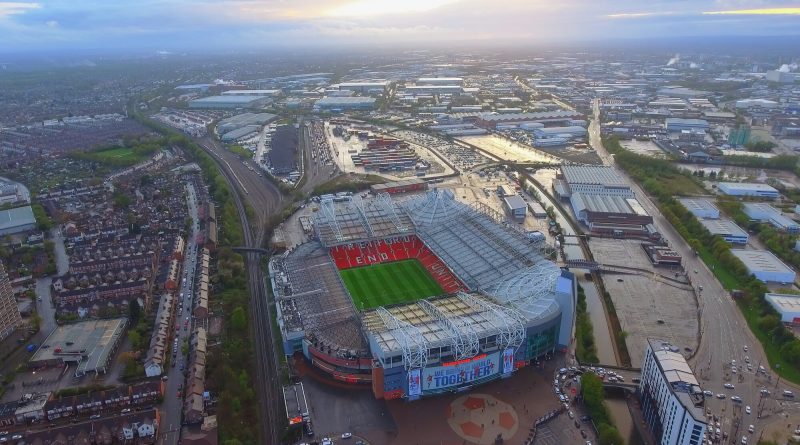
Manchester United’s new stadium is about far more than football
Subscribe to our free newsletter today to keep up to date with the latest construction and civil engineering news.
Manchester United’s confirmation of the preferred location for its proposed 100,000-seat stadium marks more than another milestone in the club’s redevelopment plans. It signals the point where one of the UK’s most ambitious regeneration programmes begins to move from vision to delivery, shifting attention from architectural concepts to planning, engineering and infrastructure.
The proposed site, around 350 metres northwest of Old Trafford, would allow the club to continue playing at its existing stadium while construction progresses nearby. Although that reduces disruption for supporters, it introduces a level of engineering and logistical complexity rarely seen on sports infrastructure projects of this scale. Live events, construction traffic, utilities, transport networks and public safety will all need to operate side by side over several years.
Yet the stadium is only part of the story.
The latest proposals position it as the centrepiece of a wider transformation of Trafford Wharfside, incorporating new homes, commercial development, hotels, public spaces and transport improvements. Taken together, the plans represent a long-term regeneration programme rather than a standalone sports venue.
For construction and civil engineering professionals, this is the more significant development. Modern stadiums increasingly serve as catalysts for economic growth, attracting investment that extends well beyond sport. King’s Cross, Battersea Power Station and Stratford after the London 2012 Olympic Games all demonstrate how landmark developments can reshape entire districts when supported by coordinated infrastructure investment. Trafford now has the opportunity to join that group.
A football club has become the client for an entire district
Major stadium developments rarely succeed in isolation. Increasingly, they form part of mixed-use masterplans that combine residential, commercial and public infrastructure to create places that remain active throughout the year.
Manchester United’s proposals reflect that shift.
Rather than replacing an ageing stadium, the club is seeking to create a destination that supports housing, employment, leisure and business investment while strengthening connections across Trafford and Greater Manchester. The stadium becomes the anchor asset, but the long-term value lies in everything built around it.
That changes the nature of the project for the construction industry.
Delivering a district demands far broader expertise than delivering a building. Highways, drainage, utilities, public transport, public realm, flood resilience and digital infrastructure become essential parts of the programme. Success will depend as much on how people move through the area on an ordinary weekday as it will on accommodating 100,000 spectators every other weekend.
Forecasts linked to the wider regeneration programme suggest it could support around 15,000 homes, tens of thousands of jobs and significant long-term economic activity. While those figures remain projections, they illustrate the scale of ambition behind the scheme.
For contractors, consultants and suppliers, projects of this size create opportunities across every stage of the supply chain. Civil engineering, structural steel, utilities, environmental services, digital engineering and off-site manufacturing all stand to benefit from a programme expected to span several years.
The project also reflects a wider trend across the UK, where private investment is increasingly expected to deliver regeneration traditionally led by the public sector. That approach has the potential to accelerate development but places greater emphasis on effective collaboration between developers, local authorities, infrastructure providers and government.
Engineering complexity begins long before the first steel arrives
Designing a landmark stadium is only one part of the challenge. Delivering it within an active urban environment while maintaining operations at one of the world’s busiest football venues is considerably more demanding.
Construction sequencing will be critical.
Maintaining matchday access, emergency routes and public transport while accommodating heavy construction activity will require meticulous planning. Large deliveries must be coordinated around fixtures, while temporary works, logistics and pedestrian management will evolve throughout the programme.
Utilities present another challenge. Large regeneration schemes often require extensive upgrades or diversions to electricity, water, telecommunications and drainage networks before permanent construction begins. These works rarely attract public attention but often determine the pace of delivery.
Transport infrastructure will be equally important.
If Trafford is to become a successful mixed-use district rather than simply hosting football crowds, investment in roads, public transport, walking routes and cycling infrastructure will be essential. Capacity improvements must serve residents, businesses and visitors every day of the week.
The project also provides an opportunity to showcase modern construction methods. Off-site manufacturing, digital twins, building information modelling and advanced logistics planning are becoming standard practice on developments of this scale. They offer greater programme certainty, reduce waste and improve quality while helping contractors manage ongoing labour shortages.
Concept designs also highlight renewable energy generation, rainwater harvesting and improved environmental performance, reflecting growing expectations that major developments contribute to wider decarbonisation goals.
The biggest challenge may not be construction
Engineering solutions exist for almost every technical challenge associated with a project of this scale. Coordinating funding, planning and infrastructure is often the more difficult task.
Planning approvals, inflation, supply chain resilience and access to skilled labour will all influence the programme. Equally important is the relationship between private investment and public infrastructure. Roads, transport, utilities and community facilities depend on multiple organisations with different priorities and funding mechanisms. Aligning those interests requires sustained collaboration long before construction reaches its peak.
Community engagement will also be central to the project’s success. Regeneration creates lasting value when existing communities benefit alongside new investment through better public spaces, employment opportunities and improved connectivity.
If Trafford develops into a thriving mixed-use district over the coming decades, Manchester United’s new stadium may ultimately be remembered as the catalyst rather than the defining achievement.
For the construction and civil engineering sector, that would be the project’s greatest legacy. Not simply the delivery of Britain’s largest football stadium, but evidence that ambitious regeneration, supported by engineering excellence and coordinated infrastructure investment, can still reshape cities and generate lasting economic value.
Source