Manchester builds 901 affordable homes in record delivery year
Subscribe to our free newsletter today to keep up to date with the latest construction and civil engineering news.
Manchester has recorded another milestone year in affordable housing delivery, adding momentum to one of the UK’s most ambitious urban housing programs at a time when many local authorities continue to struggle with supply, funding and rising construction costs.
The city delivered 901 affordable homes during 2025/26, including 439 homes available at social rent levels, according to Manchester City Council. The figures form part of a broader development pipeline that city leaders argue is beginning to translate long-term housing policy into measurable output.
In total, 4,766 homes were completed across Manchester over the past year, with affordable housing accounting for almost one in five of those properties. For a city facing sustained population growth, escalating private rents and increasing pressure on temporary accommodation services, the latest figures are politically and economically significant.
Manchester’s current housing strategy, launched in 2022, set a target of delivering at least 36,000 new homes by 2032, including 10,000 affordable, social or council homes. Nearly 2,430 affordable homes have already been completed under the strategy, with around 1,450 more currently under construction.
The pace of delivery reflects a broader shift in how large UK cities are approaching regeneration. Rather than focusing exclusively on city-center apartment growth and private investment, local authorities are increasingly attempting to combine economic development with long-term housing affordability.
Manchester’s housing strategy is moving from policy into delivery
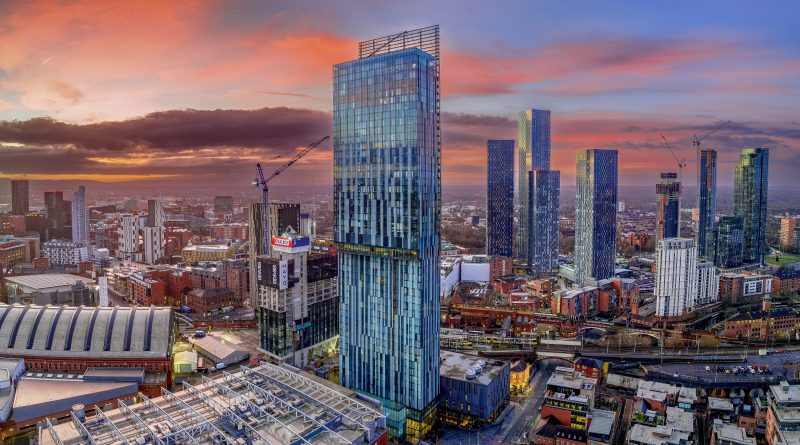
For much of the past decade, Manchester became a symbol of rapid urban expansion. New towers transformed the skyline, inward investment accelerated and population growth outpaced many regional rivals. Yet housing affordability steadily became one of the city’s defining political challenges.
Private rental costs have climbed sharply in recent years, placing increasing pressure on lower and middle-income households. Demand for social housing has also intensified across Greater Manchester, mirroring wider national shortages.
Against that backdrop, Manchester City Council has adopted a more interventionist housing strategy. Public land has become a central lever in accelerating development, while partnerships with housing associations have allowed the city to scale delivery faster than many comparable local authorities.
Housing associations within the Manchester Housing Providers Partnership delivered roughly 90% of affordable homes completed in recent years. That collaboration has become critical as councils continue to operate under financial constraints and limited direct development capacity.
The strategy also reflects changing attitudes toward urban regeneration. Affordable housing is no longer being treated solely as a social policy issue. Increasingly, it is positioned as economic infrastructure tied to workforce stability, transport planning and long-term regional competitiveness.
That shift has become particularly visible in Manchester, where strong job growth and inward migration have intensified concerns around displacement and unequal access to housing.
Affordable housing is becoming central to Manchester’s growth model
Several major developments are shaping the next phase of delivery.
In Wythenshawe, around 400 social rent homes are planned as part of wider regeneration efforts designed to reconnect neighborhoods with employment zones and transport links. Elsewhere, Brewery Gardens will provide more than 300 affordable homes, while projects in Charlestown and Moss Side continue to expand mixed-tenure housing supply.
The geographic spread of these developments is notable. Rather than concentrating affordable housing in isolated districts, the council is attempting to distribute delivery across multiple parts of the city.
Urban planners increasingly view this approach as essential in avoiding concentrated deprivation while supporting balanced economic growth. Mixed-tenure developments are also politically easier to advance than traditional large-scale council estates, particularly in areas undergoing rapid private investment.
At the same time, tensions remain.
Manchester continues to face competing demands around land use, density and commercial viability. High-rise city-center developments often generate stronger returns for private developers than affordable or social housing schemes. Construction inflation and elevated borrowing costs have also complicated delivery across the UK housing sector.
These pressures are not unique to Manchester. Across England, councils and housing associations are confronting difficult financial conditions, rising maintenance obligations and uncertainty around long-term government funding models.
The result is a national debate over how affordable housing should be financed and delivered in high-growth urban economies.
Manchester’s approach reflects wider pressures across UK cities
Manchester’s recent figures stand out partly because many cities have struggled to maintain affordable housing pipelines at scale.
Several local authorities have delayed projects because of viability concerns, while private developers have sought to renegotiate affordable housing commitments on large regeneration schemes. Rising material costs and labor shortages have added further pressure.
Against that backdrop, Manchester’s progress offers an example of how local government, housing associations and private-sector partners can coordinate around long-term targets. Yet sustaining that momentum will require continued political commitment and stable funding conditions.
Questions also remain around whether the city can preserve affordability as regeneration accelerates. Manchester’s population growth is expected to continue throughout the next decade, placing ongoing pressure on housing supply.
Critics argue that affordable housing targets alone may not fully address structural affordability issues if private rents continue to outpace wage growth. Others point to the need for stronger tenant protections and expanded social housing investment nationally.
Still, Manchester’s recent delivery figures suggest the city is beginning to move beyond planning rhetoric toward measurable output.
Another 2,000 affordable homes are already prepared to enter development phases, creating one of the largest active pipelines outside London. If current delivery rates continue, Manchester could emerge as one of the clearest examples of how regional UK cities are attempting to rebalance growth with social infrastructure.
The next several years will determine whether that model can remain financially sustainable while meeting rising demand. Success would not only reshape Manchester’s housing market, but also influence how other urban authorities approach regeneration, affordability and long-term city planning.
Source