Modular specialist Actiform expands into the defence sector and strengthens NHS partnerships with high-performance facilities
As one of the largest privately owned manufacturers of off-site buildings in the UK, Actiform Limited (Actiform) began in 1984 in Mirfield, West Yorkshire – however, its roots go further back to 1979, after an unexpected redundancy set the wheels in motion and a limited company was launched. Solely owned by its parent company, Actiform Hire, Actiform has doubled its revenue in the past year, expanded into the defence and nuclear sectors, and increased assembly capacity by recently acquiring a new manufacturing facility. Managing Director, Stefan Dransfield, explains more about the creation of the company, highlights innovative projects with the NHS and government departments, and reveals his plans for Actiform as it approaches its 45th anniversary.
“When I was made redundant from my job as a sales manager, self-employment seemed the right way to get back into work,” Stefan tells Construction & Civil Engineering magazine. “I traded as self-employed for five years before Actiform became a limited company, and today we’re involved in the design and construction of off-site engineered structures.” While 80 per cent of revenue comes from permanent healthcare, defence and commercial projects, 20 per cent derives from site accommodation, including the installation of amenity facilities for Balfour Beatty, Costains and Morgan Sindel. Previously working in the background for Tier 1 contractors, Actiform decided to shift strategy about nine years ago, pursuing ISO approvals, joining major frameworks and bringing in new talent, ultimately giving it more control over projects.
“I’ve been in this industry 53 years this year, and I’m still an analogue person,” shares Stefan. “I like a pad and pencil. Now, I’ve got people who are tech-savvy and speak the language of our clients. I’ve got a fantastic team of entrepreneurs and there’s 150 per cent commitment from everybody. I’m incredibly proud of them. We take on the jobs that other groups might shy away from and that’s where we differ from other companies. We’re very good at finding solutions and making things happen.”
Building relationships
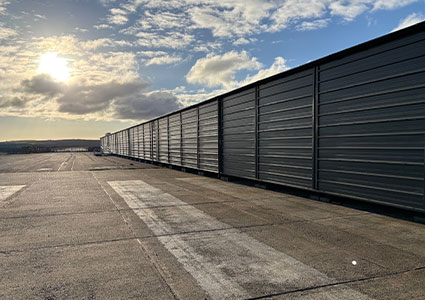
Breaking into defence and nuclear sectors significantly accelerated growth for the company. When a factory site became available nearby, Stefan made the most of the opportunity for expansion: “Essentially, this facility has doubled the area in which we can assemble components, ready to ship out.” The capacity supports sophisticated projects including ballistics ranges for the Ministry of Defence (MOD). “The MOD has controlled environments where we can alter the lighting and soundscape to simulate riot or enemy fire situations, and this allows for truly innovative training environments.” Actiform has also constructed skill rooms for hostage rescue training and blast-resistant shelters, a development Stefan has described as an “exciting journey from building jack-leg cabins in the early 1980s.”
Operating without a traditional sales department, Actiform employees actively collaborate to sell the business. “Our clients don’t want to meet a salesman – we’re in capital goods as opposed to fast moving consumer goods. Customers would rather talk to our project managers and designers who are familiar with the subject, and they rely on that continuous point of contact.” Stefan strongly believes this approach drives repeat business. “We’ve been working at Princess Alexandra Hospital for nearly seven years,” he continues. “They always return to us, and we’ve just taken an order for some more work. We deliver what we promise, and we don’t take advantage of relationships.
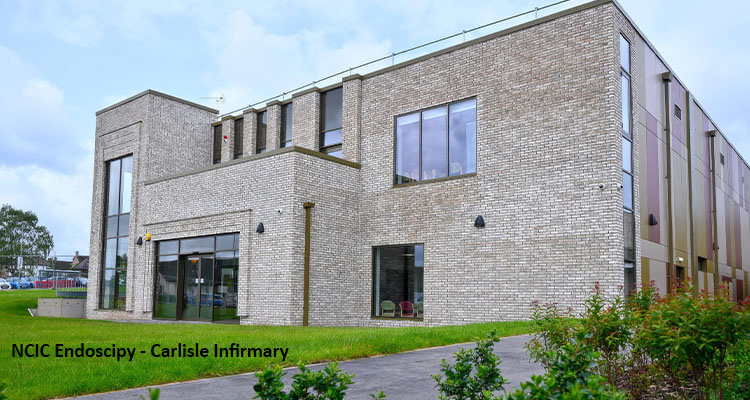
One of the aspects I most enjoy is seeing the reaction of NHS staff when they walk into the building – most of them expect a modular building to resemble a temporary classroom, but they are always pleasantly surprised by our light, modern, air-conditioned structures with bright, cheerful colour schemes. Those responses from people make the job extremely rewarding.”
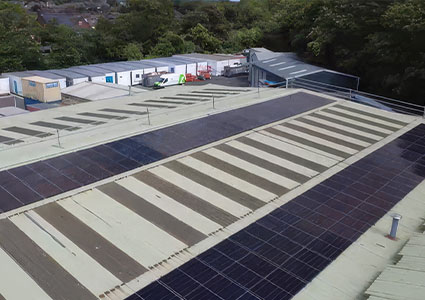
NHS net-zero requirements are driving capability development even further, Stefan explains. “We have a highly educated department working in cooperation with Huddersfield University to ensure we’re developing low energy construction and lifetime energy modelling. We use timber from renewable resources and the steel we use is largely sourced from recycled materials. These buildings are permanent and many of them feature solar panels, heat pumps and extreme thermal efficiency.”
Furthermore, the company strives to help clients in the healthcare sector by offering financial packages for its design-build products. Hospitals who lack capital budget but require additional surgical facilities can benefit from this package, which allows them to lease facilities for five to ten years before paying through the revenue gained from subsequent surgical procedures. “We’ve also got schemes in the pipeline helping to deliver community diagnostic centres,” adds Stefan. “Where finance is a problem for the NHS, or any client, it’s great being able to offer that alternative.”
This relationship-first philosophy extends to clients, suppliers and employees and shapes Actiform’s operations. “We call ourselves a family business. None of us are related, but it’s a family environment. The important thing is mutual respect. Additionally, we’re all human and it’s inevitable that sometimes mistakes will be made. We’re not a blame culture. It’s a case of exploring what we can learn from mistakes, educating ourselves and moving forward with more experience.”
Future plans
For 2026, Actiform’s priorities centre on profitable expansion and financing. “Turnover is wonderful, but it’s cash flow and profit that are essential for long-term success, so I really want to expand our financing facilities,” notes Stefan. “I also want to get our name out there and for Actiform to become better known, as we’ve always been quietly working away, so we’ll be looking at marketing strategy. I also think we’ll need a bigger factory, and I’ve been looking beyond our new boundary – there’s plenty of space for another facility.
“Where we sit at any one point isn’t necessarily where we’re going to stay,” Stefan concludes. “We will continue to evolve; we will always follow technology and the changing market. We don’t do anything radically different. We simply focus on continuous improvement and adding to our already bountiful skills and successes.”