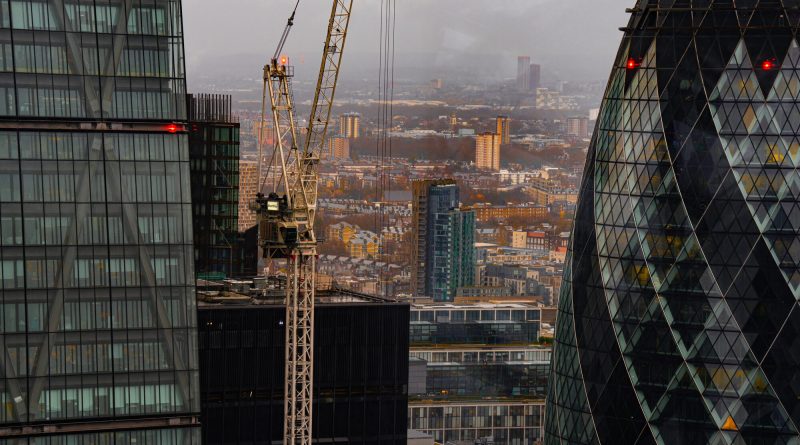
New 300m skyscraper proposed near London’s Gherkin
Subscribe to our free newsletter today to keep up to date with the latest construction and civil engineering news.
Plans for a new 300-metre skyscraper in the City of London could deliver around one million sq ft of premium office space, as developers respond to a shortage of modern workplaces in the capital.
New York-based insurer AmTrust Financial Services is proposing to demolish Exchequer Court, near the Gherkin, and replace it with a 70-storey commercial tower. The project is being overseen by Sir George Iacobescu, the property developer who helped transform Canary Wharf into one of London’s main financial districts.
If approved, the skyscraper would become one of the tallest buildings in the Square Mile. At 300 metres, it would stand just six metres below the Shard.
Public consultation is expected to begin in October 2026, with a planning application to the City of London Corporation anticipated in early 2027. AmTrust is targeting completion by 2033, subject to approval.
Alongside its office space, the proposed tower would provide around 3,500 sq m of public space, including a courtyard and elevated gardens.
The plans come as demand for premium offices continues to outstrip supply in parts of central London. The project would also join a growing pipeline of high-rise developments expected to change the City’s skyline over the next decade.
Demand for premium offices is reshaping London’s skyline
The Exchequer Court proposal comes amid a growing shortage of modern office buildings in London’s main business districts.
Although hybrid working has changed how many companies use their offices, demand for high-quality space in central locations remains strong.
Figures published by the City of London Corporation in late 2025 show that overall office vacancy in the Square Mile stood at around 7.4%. However, vacancy rates for Grade A office towers were much lower, at between 1.9% and 2.6%, according to property adviser Avison Young.
Grade A offices typically offer modern facilities, efficient layouts and strong environmental performance. These features are increasingly important to employers seeking to attract staff, reduce operating costs and meet sustainability targets.
The difference in vacancy rates suggests that businesses are becoming more selective about the offices they occupy.
Some employers are consolidating their operations into newer buildings with better facilities and transport links, rather than maintaining offices across several older properties.
This shift is creating opportunities for developers able to deliver large commercial projects in central locations.
The City of London Corporation reported that more than 500,000 sq m of office space received planning permission during 2025, with around half already under construction.
Meanwhile, property consultancy Knight Frank has forecast that available top-tier office space in the City could be fully occupied by 2028.
These figures help explain why developers are investing in projects that may take several years to complete.
The proposed AmTrust tower would not be ready until 2033, meaning its commercial success will depend on demand for premium offices remaining strong well into the next decade.
Major tower projects reflect long-term investment in the City
The Exchequer Court proposal forms part of a wider programme of high-rise commercial development across London’s financial district.
Among the largest projects is One London, also known as 1 Undershaft, a planned 74-storey tower near the Gherkin. At approximately 310 metres, the building would become one of the tallest in the capital.
Other major office developments are progressing around Gracechurch Street and Bishopsgate.
Together, these projects point to continued investment in the Square Mile, despite concerns about construction costs, financing conditions and the long-term effects of hybrid working.
Sir George Iacobescu’s involvement in the Exchequer Court development is also notable.
During more than three decades at Canary Wharf, he helped oversee the transformation of former docklands into a major commercial centre. His experience includes delivering large office buildings, attracting international tenants and managing complex regeneration projects.
For AmTrust, that experience could be valuable as it seeks to deliver another major development in one of London’s most densely built areas.
The project also reflects the City of London Corporation’s longer-term plans to expand commercial floorspace.
Its proposed City Plan 2040 sets a target of at least 1.2 million sq m of additional office space by 2040, based on expectations that the Square Mile will remain a major international business centre. However, the plan’s formal adoption has been delayed following government intervention in 2026.
The scale of London’s development pipeline also raises questions about how much new space the market can absorb.
Although demand for premium offices is currently strong, projects scheduled for completion in the early 2030s will enter a market shaped by economic conditions, business investment and workplace trends that remain difficult to predict.
Planning and construction costs will test the next wave of towers
Despite strong demand for modern office space, delivering a 300-metre skyscraper in central London presents major financial and technical challenges.
High-rise construction requires significant investment in structural engineering, building services, fire safety systems and specialist materials. Costs can rise further when building sites are surrounded by existing properties and major transport infrastructure.
Developers must also meet increasingly demanding environmental standards.
The City of London Corporation aims to achieve net-zero carbon emissions across the Square Mile by 2040. Its planning approach places greater emphasis on energy efficiency, lower-carbon construction and the environmental impact of replacing existing buildings.
For the Exchequer Court proposal, the decision to demolish the current building is therefore likely to face scrutiny alongside the benefits of providing more modern office space.
Planning requirements will also play an important role. Tall buildings can affect protected views, daylight and the character of surrounding streets. Neighbouring property owners may also raise legal concerns over rights to light.
These factors can influence building design, construction costs and delivery schedules.
The wider commercial question is whether rental income from premium offices will justify the rising cost of developing and operating increasingly complex skyscrapers.
With completion targeted for 2033, AmTrust is making a long-term investment based on London’s position as a global financial centre and the continued appeal of high-quality office buildings.
The proposed tower adds to evidence that developers expect demand for premium office space to remain strong. Whether those expectations are met will depend on planning decisions, construction costs and the strength of London’s commercial property market over the coming years.
Source:
AOL