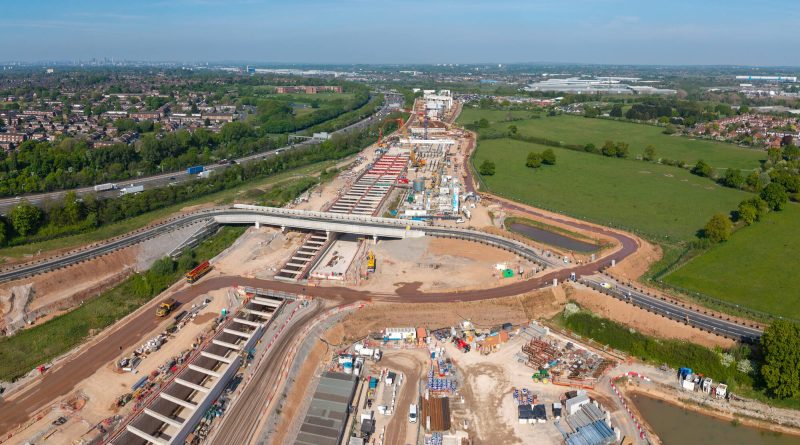
New HS2 civil engineering contracts mark the next phase of construction
Subscribe to our free newsletter today to keep up to date with the latest construction and civil engineering news.
Britain’s largest infrastructure project has reached another milestone with HS2 signing a new series of civil engineering contract deals to support the next stage of construction. While contract announcements can appear to be routine procurement updates, these agreements reflect a broader change in how the railway is being delivered.
After years focused on earthworks, tunnels, bridges and viaducts, HS2 is entering a phase where integrating, testing and completing the railway becomes the priority. That transition calls for commercial arrangements better suited to the remaining work while providing greater certainty for contractors, clients and the wider supply chain.
The latest agreements show an effort to align procurement with the practical demands of delivering one of Europe’s most complex transport infrastructure programmes. They also provide an indication of how major public projects adapt their commercial strategies as they progress through different stages of construction.
How HS2’s contracting approach is changing as the programme matures
The newly announced civil engineering contract deals build on relationships with existing delivery partners rather than introducing an entirely new procurement model. Their purpose is to provide greater flexibility while maintaining progress as different sections of the programme move towards completion.
Large infrastructure projects rarely retain the same commercial structure throughout their lifecycle. Contract models suited to heavy construction often need to evolve as programmes transition towards railway systems integration, testing and operational readiness. For HS2, that means managing the interfaces between civil engineering, railway systems and future operations with greater coordination.
The revised agreements also reflect wider developments across the infrastructure sector. Programmes of this scale benefit from reducing contractual complexity, encouraging closer collaboration between delivery partners and creating clearer commercial incentives around programme, cost and performance.
For contractors, updated agreements offer greater visibility over future workloads while supporting more efficient deployment of specialist skills and resources. For HS2 Ltd, they provide another opportunity to strengthen programme governance during an increasingly complex phase of delivery.
Why the new agreements matter beyond HS2
The importance of these contracts extends beyond the railway itself. HS2 remains one of the UK’s largest infrastructure programmes, supporting thousands of jobs across construction, manufacturing, engineering, design and professional services.
A stable commercial environment gives suppliers greater confidence to invest in equipment, recruit skilled employees and expand specialist capabilities. That continuity is particularly valuable as the construction industry continues to manage inflationary pressures, skills shortages and changing market conditions.
The programme also continues to demonstrate commercial approaches that may influence future infrastructure investment. Greater collaboration, earlier contractor involvement and improved integration between disciplines are becoming more common across major transport projects as clients seek better long-term outcomes.
HS2 has already helped drive innovation in digital construction, off-site manufacturing and productivity improvements. As the programme moves beyond major civil engineering activity, maintaining those gains during railway installation and commissioning will become increasingly important.
The focus now shifts towards railway delivery
The latest contract deals come as HS2 continues its transition from building the route to delivering a fully operational railway. Earlier procurement decisions established delivery partners for track, signalling, telecommunications and power systems through contracts worth around £3 billion, creating a collaborative Rail Systems Alliance that will work alongside the completion of civil engineering works.
Across the route, major structures, tunnels and bridges continue to reach completion, allowing activity to shift steadily towards railway installation, systems integration and commissioning. This represents the natural progression of a programme that has spent much of the past decade creating the infrastructure required for Britain’s new high-speed railway.
Ultimately, these commercial arrangements will be measured by how effectively they support programme certainty, cost management and coordinated delivery. While public debate often focuses on budgets and completion dates, the contractual frameworks behind projects of this scale play a significant role in determining whether engineering, procurement and operational teams can work together efficiently.
As HS2 enters its next phase, attention is moving from constructing individual assets towards integrating thousands of components into a railway designed to support future passenger services. For the wider infrastructure sector, the programme remains one of the UK’s most significant case studies in delivering complex, long-term transport investment.
Source