RWE and KKR seal £12bn deal to build Norfolk’s Vanguard wind farms
Subscribe to our free newsletter today to keep up to date with the latest construction and civil engineering news.
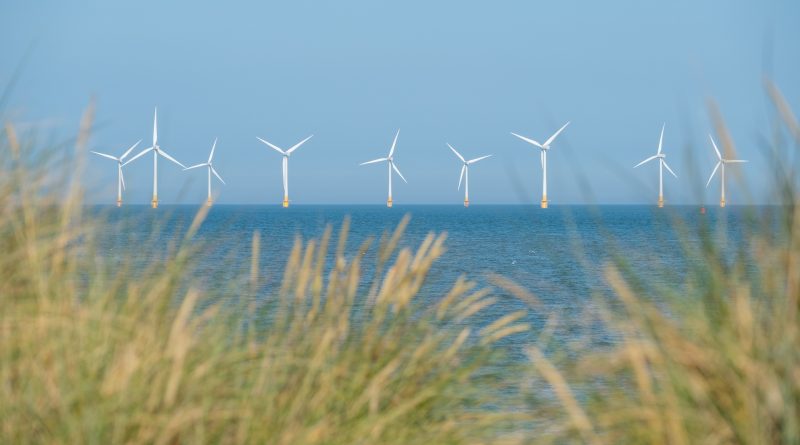
RWE and KKR have reached financial close on the Vanguard West and Vanguard East offshore wind farms off the Norfolk coast, committing around £12 billion to 2.8GW of new generation capacity in the North Sea.
The total covers the construction of both wind farms and their associated transmission infrastructure. KKR has acquired a 50% stake in each project, formally establishing the 50:50 joint venture first announced in January 2026. RWE will lead project delivery on behalf of the partners.
RWE says the debt package is the largest non-recourse project financing ever secured for UK offshore wind. Offshore construction is due to start in early 2027, with both wind farms expected to be fully commissioned in 2030. Once operational, the projects will have the capacity to supply the equivalent of around 3 million UK homes.
For contractors, the timing matters as much as the headline figure.
Large offshore wind schemes can spend years in development. Financial close is the point at which the money is committed, contracts firm up, and work shifts from preparation to full delivery.
The Vanguard financing shows how UK offshore wind is being funded
The project financing comprises £11.1 billion in cash facilities and £1.7 billion in ancillary facilities, provided by a consortium of 35 international banks.
Public money plays a part. The package includes a £1 billion commitment from the UK’s state-owned National Wealth Fund, with credit cover from Germany’s Euler Hermes and Denmark’s EIFO. RWE says this is the first time the National Wealth Fund and Euler Hermes have taken part in a UK offshore wind project financing.
Non-recourse financing means lenders are repaid from the projects’ own revenues rather than from the sponsors’ wider balance sheets. That places the weight on long-term income, which here rests on Contracts for Difference (CfDs) won in the government’s Allocation Round 7.
In January 2026, each project was awarded a 20-year, inflation-indexed CfD at a strike price of £91.20 per megawatt hour in 2024 prices. A CfD guarantees the generator a set price for its electricity, which gives lenders the revenue certainty they need to commit capital on this scale.
Prime Minister Andy Burnham welcomed the investment as he prepared to attend the COP31 climate summit in Antalya, Turkey. He said the National Wealth Fund meant that “public investment is working alongside private capital to build homegrown energy”.
Onshore cable and substation works for Vanguard are well advanced
Much of the work closest to civil engineering is already under way on land. RWE says onshore cable works and construction of the substations are well advanced. The projects will use coordinated grid infrastructure, designed to reduce environmental and community impacts.
Onshore packages are where an offshore wind farm becomes a conventional civils programme. Projects of this kind typically involve long cable routes, trenching and ducting, crossings under roads and watercourses, temporary access roads, and substation foundations and buildings.
Getting that work done early reduces the risk that power is ready offshore before the grid connection is ready onshore. Grid capacity is already shaping which schemes go ahead, as Microsoft’s withdrawal from a planned AI data centre in Essex showed last month.
Offshore, the first foundation installation for Vanguard West is planned for the first half of 2027, followed by Vanguard East. The wind farms will sit 50 to 80 kilometres off the Norfolk coast, and each will have an installed capacity of 1.4GW.
The government has said the investment will support more than 2400 jobs across the construction and operation phases. RWE chief executive Markus Krebber described the partnership as “a vote of confidence in the UK as an attractive place to invest”.
Supply chain capacity will decide whether Vanguard’s 2030 date holds
Vanguard will not be the only large offshore wind project moving towards construction in the next few years.
On the same day, SSE announced 130 jobs linked to the latest stage of its Berwick Bank B wind farm off the Scottish coast, with Siemens Energy chosen as preferred supplier for its turbines and substation platforms.
Projects at this scale draw on the same pool of installation vessels, cable makers, substation contractors, and skilled workers. When several reach construction at once, programme risk often sits in the supply chain rather than in the finance.
That makes the 2030 commissioning date the number to watch. RWE has secured the capital, the revenue contracts, and a head start on land. The open question is whether vessels, components, and labour will be available when Vanguard needs them, and whether the National Wealth Fund’s first move into offshore wind project finance becomes a template for the schemes that follow.
Source:
RWE