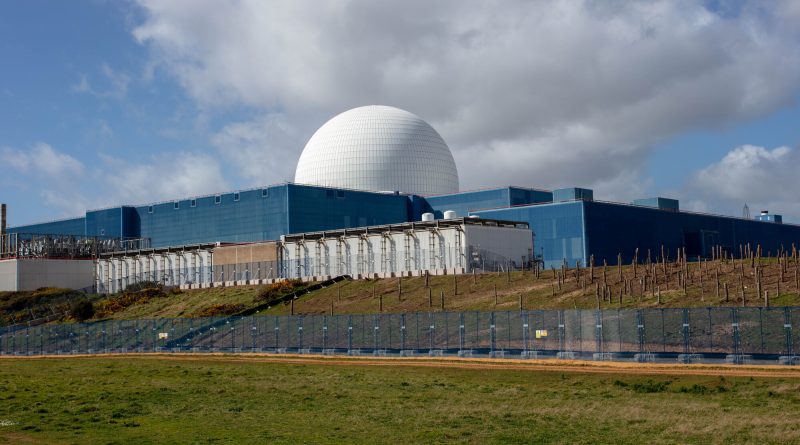
Sizewell C road setback raises questions over project delivery
Subscribe to our free newsletter today to keep up to date with the latest construction and civil engineering news.
Sizewell C has replaced the contractor due to build two important roads serving its £38 billion nuclear power project in Suffolk after the parties failed to agree commercial terms.
Galliford Try had been preparing to construct the 6.5km Sizewell Link Road and 1.8km Two Village Bypass. Kier will now take responsibility for the link road, while Suffolk-based Breheny Civil Engineering will build the bypass.
The change could delay completion of the roads by between six months and a year, according to a source cited by the Financial Times. Sizewell C disputes suggestions that the change will delay construction of the nuclear power station itself.
That distinction will be important in the months ahead.
The roads are supporting infrastructure rather than part of the nuclear plant. However, they are designed to manage the large flow of workers and heavy goods vehicles expected during a construction programme lasting 10 to 12 years.
A delay therefore raises questions beyond the road contracts themselves. It provides an early test of how Sizewell C manages commercial risk, changes between contractors and the relationship between its main construction programme and the infrastructure surrounding it.
The road programme is closely tied to how Sizewell C will be built
The Sizewell Link Road is planned to connect the A12 with an area close to the main construction site, taking traffic away from Theberton and Middleton Moor.
The Two Village Bypass is intended to divert vehicles around Farnham and Stratford St Andrew.
Both form part of a wider transport plan designed to reduce the pressure caused by Sizewell C construction traffic. Other measures include park-and-ride sites, freight management facilities, highway improvements and greater use of rail and sea transport.
This makes the road programme more than a conventional highways package.
Large infrastructure projects depend on a network of supporting systems. Workers need to reach the site. Materials need predictable routes. Heavy vehicles need to move without placing excessive pressure on local roads.
If one part of that system changes, project managers have to decide how much of the impact can be absorbed elsewhere.
There is no evidence at present that the contractor change has altered the timetable for the nuclear station. Sizewell C says there is no disruption to the wider project.
But the road changes matter because the programme is moving towards larger-scale construction. Kier has also been appointed to build the 15-hectare North Plaza, which will become the main entrance to the site and include bus interchanges, a delivery hub and security facilities.
As activity increases, the reliability of supporting transport infrastructure will become more important.
Commercial disagreements can expose risk before main construction peaks
Galliford Try had spent about 20 months involved in early contractor work before the companies failed to reach an agreement for the construction phase.
The original roads contract was reportedly worth between £150 million and £200 million. A source cited by the Financial Times said design changes added £30 million to the cost.
Galliford Try has said its decision reflected its approach to balancing risk and reward when taking on projects. Sizewell C said the two organisations had not agreed commercial terms and thanked Galliford Try for its work preparing the sites.
The disagreement highlights a familiar issue for large infrastructure programmes.
Cost pressure does not begin when the main structure is being built. It can appear during design development, procurement and enabling works, particularly when the scope changes or the parties disagree about who should carry additional risk.
For Sizewell C, this issue has added significance because the project has repeatedly pointed to lessons from Hinkley Point C.
Sizewell C will use the same EPR reactor design as Hinkley Point C, with the aim of gaining from repetition and experience. That approach should reduce some technical and construction uncertainty.
However, repeating a reactor design does not remove every delivery risk. Roads, logistics facilities, local infrastructure, procurement agreements and site conditions still require their own contracts and management.
The experience with the road package shows why controlling these interfaces can be as important as controlling the main engineering programme.
Containing the impact will be the next test
For nearby communities, the main concern is more immediate.
The new roads were intended to reduce the number of construction vehicles travelling through villages during the long building phase. Any delay to their opening could extend the period in which existing roads carry more project traffic.
Sizewell C originally expected the Two Village Bypass to be built by the end of 2026, while the Sizewell Link Road was expected to follow in 2027. More recent reporting says the link road is now due to open in 2028.
That does not mean the nuclear station itself will open later.
Sizewell C is expected to begin generating electricity in the mid-to-late 2030s and eventually produce enough power to meet the equivalent annual needs of about six million homes.
The project also remains central to the government’s plan for new nuclear generation and has substantial public backing. The government committed £14.2 billion to Sizewell C in 2025 and holds a 44.9 per cent stake.
The immediate measure of the contractor change will therefore be whether Sizewell C can keep its effects within the road programme.
Large infrastructure projects rarely depend on one contract alone. Their schedules are shaped by the connections between civil works, transport, suppliers, planning commitments and the main construction site.
For Sizewell C, the replacement of Galliford Try is an early example of that complexity. The larger question is whether the project can absorb the change without allowing a problem in supporting infrastructure to spread into the programme it was built to support.
Source