
The Refrigerant Phase-Out: How Regulatory Changes Are Forcing Data Center Evolution
The global shift away from high global warming potential (GWP) hydrofluorocarbons (HFCs) is changing how facilities approach thermal management. Driven by new regulations, data center operators face mandatory refrigerant transitions that require infrastructure overhauls and process improvements. As legacy cooling systems now carry compliance risk, data center cooling companies are responding with low-GWP alternatives and next-generation systems to meet both regulatory deadlines and operational demands.
Understanding the HFC Phasedown Regulations
Two major regulatory frameworks are accelerating the transition away from traditional refrigerants. Both target high-GWP substances that contribute to climate change and establish enforceable timelines for adopting alternatives.
The American Innovation and Manufacturing Act and Its Mandates
The American Innovation and Manufacturing Act provides the domestic regulatory structure for phasing down HFCs in the United States. Enacted to reduce the production and consumption of high-GWP substances, it establishes a step-down schedule that gradually reduces availability. The Act mandates an 85% phasedown from historic baseline levels by 2036.
The phasedown happens in stages, with the first reduction beginning in 2022 and subsequent cuts accelerating through 2029 and 2034. Each stage further restricts the volume of HFCs that manufacturers can produce or import. Common refrigerants like R-410A and R-134a face the most aggressive cuts due to their high global warming potential.
Facilities relying on HFC-based cooling must plan equipment upgrades and refrigerant conversions well before supply constraints drive costs upward. The Environmental Protection Agency (EPA) allocates allowances for HFC production and import, creating a market mechanism that makes continued use of legacy refrigerants increasingly expensive.
The Kigali Amendment’s Global Impact
The Kigali Amendment extends the Montreal Protocol’s reach to HFCs and coordinates international phasedown efforts in developed and developing nations. With full global implementation, the amendment aims to prevent up to 0.5°C of warming by 2100. The initiative also projects global HFC use to drop by up to 85% by 2047.
This international framework affects multinational data center operators that manage facilities across different jurisdictions. For instance, equipment procurement decisions must account for regional compliance timelines and refrigerant availability. The amendment creates broader international momentum around HFC phasedown, which can affect equipment procurement, refrigerant availability and long-term planning for operators with distributed infrastructure.
Operational and Financial Risks of Outdated Cooling
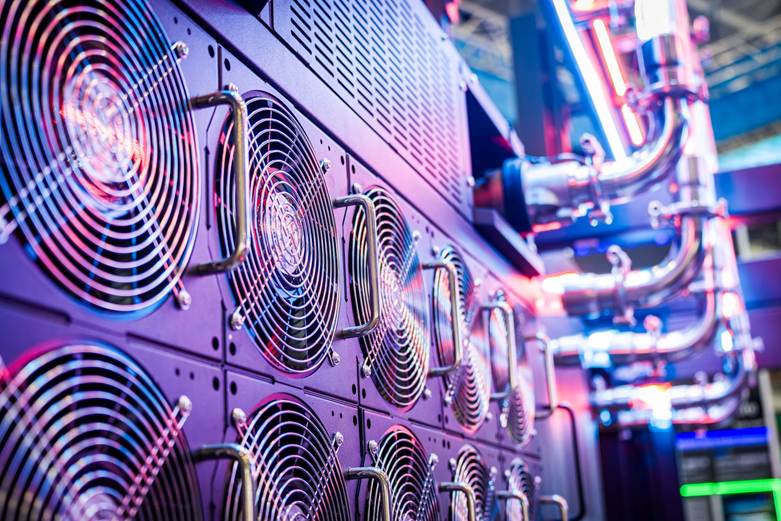
Facilities that delay upgrades may face exposure on multiple fronts. Proactive transitions enable facilities to control timing and vendor selection, while reactive replacements driven by refrigerant shortages or system failures can entail higher costs and extended downtime.
Facilities reliant on legacy HFC systems face longer lead times for replacement refrigerants and price volatility as production allowances decline. Cooling system failures in this environment mean extended downtime, while teams source scarce coolants or expedite equipment replacements. Mission-critical cooling infrastructure designed around soon-to-be-obsolete refrigerants then becomes a liability.
Older HVAC for data centers typically operates at lower efficiency than systems engineered for low-GWP refrigerants. Running beyond its design life, this equipment consumes excess power and struggles to maintain stable server inlet temperatures during peak loads. The result is higher utility bills and increased risk of thermal excursions that threaten hardware reliability. When specialized legacy equipment fails, the shortage of qualified technicians further complicates maintenance and emergency repairs.
Scaling capacity with outdated mission-critical cooling systems also forces operators into expensive retrofits or complete overhauls. Adding IT load to facilities locked into aging HFC infrastructure necessitates parallel investments in cooling upgrades that newer low-GWP systems would handle more efficiently. Delaying the transition multiplies the eventual capital outlay and may cause even more disruption.
Next-Generation Technologies From Top Data Center Cooling Companies
The industry is transitioning toward alternatives like hydrofluoroolefins and natural refrigerants. Three providers offer integrated solutions spanning equipment design, installation and ongoing service.
1. CoolSys
CoolSys helps clients handle the transition to low-GWP refrigeration systems through end-to-end engineering and implementation services. The company’s combined heat and power (CHP) systems provide on-site energy generation, which helps reduce grid dependence and enhance energy resilience. This is critical for data centers, where a CHP system can provide primary power while thermal output drives cooling systems.
CoolSys operates 110+ branches across the U.S. and provides nationwide coverage for commercial and institutional clients. It offers 24/7/365 emergency service, preventive maintenance and sustainable end-of-use solutions for aging systems. This data center cooling company also specializes in conversions to ultra-low-GWP systems, including CO2 technology, and positions these upgrades as compliance strategies.
Key features:
- Enhances energy resilience for mission-critical data centers with on-site CHP systems
- Delivers nationwide 24/7 emergency service to support custom-phased transitions and ensure cooling continuity
- Handles full life cycle management from design through decommissioning
2. Copeland
Copeland manufactures compressors and controls built for low-GWP refrigerant applications. Its broad portfolio includes components for CO2 refrigeration, which is a natural refrigerant with minimal environmental impact. The company’s technology enables scalable HVAC for data centers that adapt to growing IT loads without reliance on high-GWP substances.
Copeland’s component-level focus allows integration into both new builds and retrofit projects. This modularity reduces the complexity of transitioning away from legacy HFC infrastructure, while maintaining operational continuity during the changeover.
Key features:
- Provides components compatible with natural and synthetic low-GWP refrigerants
- Enables incremental capacity additions without full system replacement
- Supports both greenfield installations and existing facility upgrades
3. Climate Pros
Climate Pros specializes in eco-friendly cooling solutions using CO2 and propane as refrigerants. The company addresses the technician shortage by maintaining service teams trained in natural refrigerant systems. This expertise proves valuable for teams transitioning to technologies that require specialized handling and safety protocols.
Climate Pros focuses on mission-critical cooling applications where reliability and environmental responsibility intersect. The company delivers complete life cycle coverage from installation through ongoing maintenance and system upgrades. Its service model ensures facilities have access to qualified personnel capable of maintaining advanced low-GWP systems over their operational lifespan.
Key features:
- Delivers installations using natural refrigerants with low environmental impact
- Maintains trained service personnel for specialized refrigerant handling
- Focuses on applications where system reliability is nonnegotiable
Future-Proofing Data Center Cooling Strategies
Operators must audit the current infrastructure and identify equipment that depends on phased-out refrigerants. Developing a strategic transition plan will enable facilities to align upgrades with capital budgets and avoid emergency replacements driven by shortages. Acting now gives facilities control over transition costs and timing rather than facing mandated deadlines with limited options.
*Please note that this list includes sponsored content. Some of the companies, products, or services featured have entered into commercial agreements for placement. Sponsored placements do not necessarily reflect an endorsement and should be considered alongside other options in the marketplace.