The Sirius Group links investigation, design and construction to manage ground risk across UK development projects
Every project begins with the ground. Before design can progress or infrastructure takes shape, site conditions determine the next steps. Across the UK, developers work on land influenced by its history, regulations, and changing infrastructure and energy needs. In this environment, developers need more than just delivery; they need coordination from the very beginning. The Sirius Group answers that need by combining consultancy and contracting into a single structure, guiding projects from initial assessment through to civil works.
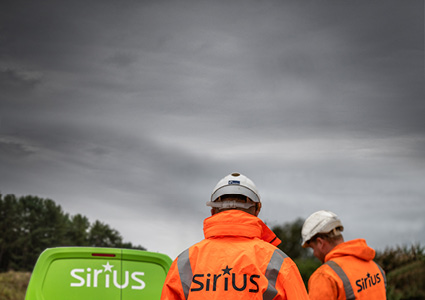
Chris Cooke, Group Business Development Manager, and Anthony Lee, Civils Director, are both part of this integrated system, each helping the business connect its services and respond to client needs. Their roles highlight the company’s commitment to reducing fragmentation in site development. Chris puts it simply, “When The Sirius Group was established in 2003, our goal was clear: give developers more confidence when they face complex ground conditions.” That purpose still drives the company’s work across housing, infrastructure, renewables, and industry.
The Sirius Group brings together demolition, drilling and grouting, remediation, ground stabilisation, earthworks, and civil engineering, along with in-house consultancy covering geotechnical, environmental, and planning expertise. The structure allows projects to move forward with a single team responsible for both analysis and execution. The aim is to manage risk early and keep projects moving smoothly as work continues.
Chris highlights the benefit of delivery alignment. “What truly sets The Sirius Group apart today is the breadth and integration of our services.” This integration shapes how the team approaches each site. Instead of working in silos, teams assess ground conditions together, develop buildable solutions, and align program, cost, and safety plans right from the start. Chris adds, “For our clients, that means fewer handoffs, less uncertainty, and one accountable partner who can take a project from early assessment all the way to construction delivery.”
Anthony’s civils team works within this model, turning early analysis into infrastructure on site. As site conditions and sector needs evolve, demand for this connection keeps growing. Anthony observes, “Having a mix of sectors gives us resilience, but what truly drives our civils workload is how complex sites are becoming. Whether it’s housing, highways, or renewables, our clients want contractors who can engage early, understand the ground, and deliver infrastructure with confidence. That’s where we really excel.”
Projects and capability
Projects across the UK show how The Sirius Group model works in practice. At Dawsons Corner in Leeds, the company supports a transport upgrade led by Leeds City Council and delivered by John Sisk & Son. The team operates within a live highway network, coordinating traffic management, sequencing, and temporary works. The civil engineering scope depends on careful planning that considers both ground conditions and operational constraints.
At Harrier Park in Hucknall, the focus is on remediation. The site’s aerospace history means the team manages contamination and subsurface structures before development begins. By tackling these issues early, they prepare the land for its next phase, aligning remediation with the broader construction programme.
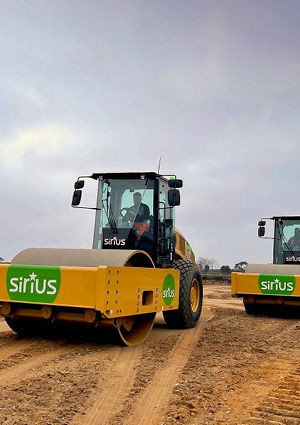
At Brightwell Lakes in Ipswich, earthworks are central to delivery. The project’s scale demands careful management of material movement and formation levels across each phase. The group’s in-house fleet supports the work, enabling control of output and sequencing throughout the project.
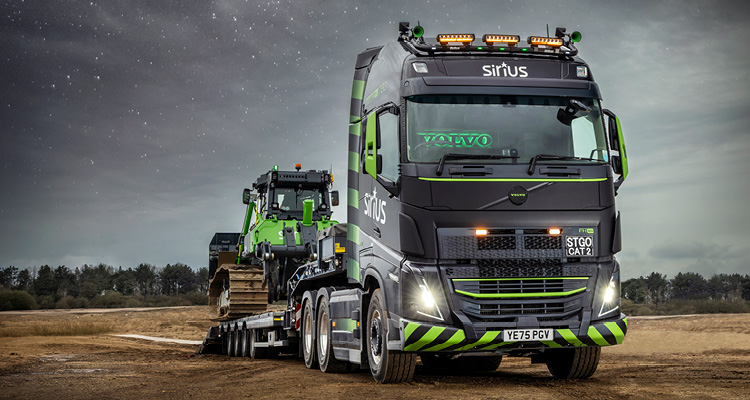
Investment in plant and logistics supports these capabilities. The equipment lineup includes drilling rigs, soil stabilisation machinery, haulage units, and excavation resources. With these assets, teams can mobilise quickly and adapt as needed, without depending on third parties. Managing their own equipment helps the team stay on schedule and ensure continuity across projects, connecting operational delivery with earlier planning decisions.
Sustainable practical solutions
Sustainability shapes the way projects are designed and delivered. The team aims to reduce waste, improve efficiency, and plan work with environmental impact in mind. This approach earned The Sirius Group Gold status with the Supply Chain Sustainability School, showing how sustainability is woven into planning, logistics, and delivery.
Chris ties this directly to early decision-making: “Sustainability works best when it’s part of the process from the very start. For us, that means cutting waste, being more efficient, and using our technical expertise to deliver practical solutions that benefit both the environment and our clients.”
The Sirius Group approach includes reusing materials, reducing transport needs with smart planning, and investing in equipment that produces fewer emissions. Digital ground modelling and data integration help the team refine designs before construction begins. Chris remarks, “It recognises the progress we’ve made, and it reinforces our commitment to keep getting better.”
Culture and ownership
The Sirius Group’s shift to employee ownership in 2023 formalised a culture built on shared responsibility. This model connects individual roles to company goals, linking performance on site with long-term vision. Teams work with a focus on collaboration and accountability, creating a structure where employees have a real stake in delivery standards and client relationships.
The internal alignment strengthens external partnerships. Earning the title of Infrastructure UK Supply Chain Partner of the Year 2025 from John Sisk & Son reflects strong performance in safety, quality, program delivery, and collaboration. Recognition like this supports repeat business and helps the company get involved in projects earlier, where the integrated model delivers the most value.
Looking ahead, The Sirius Group remains focused on controlled growth, investing in plant and systems, and developing its workforce. The connection between consultancy and contracting stays at the core, with digital tools and operational capabilities supporting this approach. Chris and Anthony continue to link market demand with delivery, since every project still depends on decisions made from the ground up.