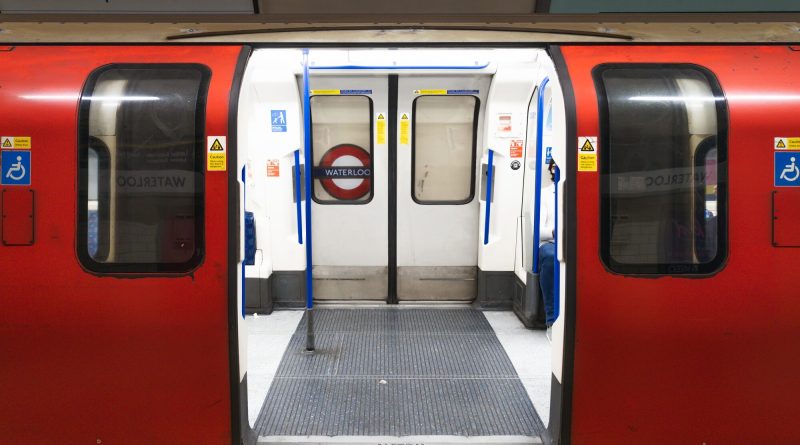
Why designing accessible transport infrastructure could unlock £176.4bn
Subscribe to our free newsletter today to keep up to date with the latest construction and civil engineering news.
When the Institution of Mechanical Engineers (IMechE) estimated that a fully accessible public transport network could add £176.4 billion to the UK economy, the headline understandably focused on the financial opportunity. Behind that figure, however, lies a broader challenge for the construction and civil engineering sector.
Accessibility is no longer simply about meeting statutory obligations or improving passenger experience. It is becoming a measure of infrastructure performance that influences economic productivity, asset value and the long-term success of transport investment.
For civil engineers, designers and contractors, this represents a shift in thinking. Accessibility should not be viewed as a feature introduced during the latter stages of a project or addressed through costly upgrades after construction. Instead, it belongs alongside resilience, sustainability and operational efficiency as a core design principle.
As the UK continues investing in rail, highways and urban transport, the engineering decisions made today will determine whether future infrastructure serves the widest possible section of society while delivering lasting economic value.
Accessibility is becoming a benchmark of infrastructure performance
Historically, transport accessibility has largely been driven by legislation and policy. Compliance with the Equality Act, Building Regulations and accessibility standards has improved stations, interchanges and public spaces, while programmes such as Network Rail’s Access for All have expanded step-free access across the rail network.
The conversation is now evolving.
The IMechE argues accessibility should be recognised as an economic multiplier rather than simply a legal requirement. Better access enables more people to enter employment, increases passenger demand and encourages greater participation in retail, leisure and tourism. Those benefits extend beyond transport operators, strengthening local economies and improving the return on infrastructure investment.
This broader perspective reflects the way infrastructure projects are increasingly evaluated. Success is no longer measured solely by programme, budget and technical delivery. Projects are also expected to improve resilience, support decarbonisation, strengthen regional connectivity and create lasting social value.
Accessibility deserves to be assessed against those same objectives.
For asset owners and project sponsors, inclusive infrastructure can improve network utilisation, increase operational efficiency and enhance the long-term value of transport assets. For engineers, it represents another opportunity to improve performance through better design rather than corrective intervention later in an asset’s life.
Designing accessibility from the outset reduces cost and complexity
Many of Britain’s transport assets were constructed during the Victorian era, when accessibility was rarely considered. Narrow platforms, ageing bridges, steep stairways and constrained station layouts present significant engineering challenges for modernisation projects.
Retrofitting lifts, ramps and step-free routes into these environments is technically demanding, disruptive and expensive. Structural alterations, utility diversions, temporary works and extended construction programmes often become necessary while maintaining operational services.
These realities reinforce the value of embedding accessibility into projects from the earliest stages of planning and design.
Station layouts, platform interfaces, pedestrian routes, bridge gradients, lighting, drainage, tactile paving and wayfinding all influence how confidently people move through transport networks. Digital passenger information, real-time journey updates and consistent signage have also become essential components of inclusive infrastructure.
When accessibility is considered alongside operational requirements from the outset, engineers have greater flexibility to develop integrated solutions without substantially increasing project costs. Whole-life asset management also benefits by reducing future interventions while creating infrastructure capable of meeting changing demographic needs over several decades.
Far from being an additional constraint, inclusive design frequently results in transport environments that are safer, more intuitive and easier to operate and maintain.
Future transport projects will increasingly be judged by inclusive design
The UK’s next generation of transport investment presents an opportunity to embed accessibility from the beginning rather than treating it as an enhancement.
Major rail upgrades, station redevelopments, integrated transport hubs and urban regeneration schemes are already expected to balance multiple priorities. Engineers are tasked with delivering infrastructure that reduces carbon emissions, improves climate resilience, embraces digital technologies and provides long-term value for money.
Accessibility now belongs alongside those priorities.
Procurement frameworks are placing greater emphasis on social value, while clients increasingly expect infrastructure that serves diverse communities and supports wider economic outcomes. Inclusive design is therefore becoming part of project development from feasibility and concept design through detailed engineering, construction and long-term asset management.
For consultants and contractors, this creates opportunities to demonstrate expertise beyond regulatory compliance. Digital modelling, stakeholder engagement, user-centred design and whole-life costing all contribute to delivering infrastructure that meets operational requirements while creating lasting public benefit.
The engineering profession has consistently adapted to changing priorities. Sustainability, resilience and digital construction have all become defining characteristics of modern infrastructure delivery. Accessibility appears set to follow the same path.
If the IMechE’s projections prove accurate, the question facing the industry is no longer whether transport infrastructure should be accessible. It is whether the sector can embed inclusive design early enough to maximise the economic and social value of every future project. For civil engineers, that may prove to be one of the defining infrastructure challenges of the coming decades.
Source